
Bed Bug Bites
“Good night, sleep tight, don’t let the bed bugs bite.” This horrific nighttime creature is a member of the Hemiptera order of insects that feast solely on blood. Because of the way they mate, they multiply in size while breeding. A Department of Health report claimed that if forty are placed in a room with a mild temperature, within six months their population would exceed 5,900.
How to Spot Them
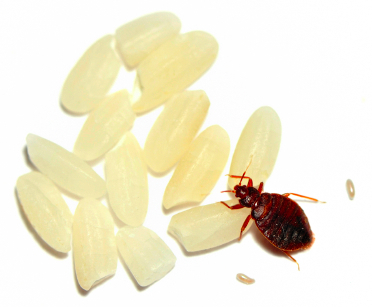 They are oval-shaped insects, flat in appearance, and have a mahogany color which varies from a straw-like tint to a deep reddish mahogany. They are often nicknamed “Mahogany Flats” “Red Coats” and “Crimson Ramblers” for this reason.
They have well developed legs and they are apt to crawl up vertical surfaces quite easily. They do not fly; both their forewings and hind wings are functionally nonexistent. They have very visible antennae and regularly emit a foul odor.
The Bite
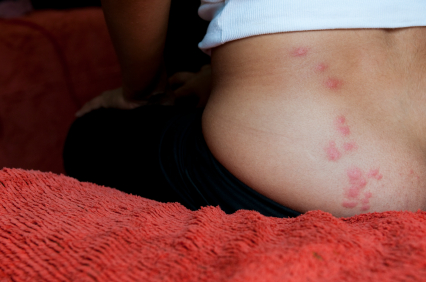
They are extremely shy insects, drawn to the human body at night for feeding. They have a “beak” with mouthparts that are dissected into two: one mouth part secretes the bugs’ saliva into the human, and the other mouth part feeds off of blood.
Some individuals report severe adverse reactions to bites, others have no reaction at all, and some have a mild reaction. For some reason unknown to scientists, the majority of people over 65 do not have a reaction to bites whatsoever.
They do not have the capabilities of host detection when the host (human) is over five feet away.
Have Bed Bug Problems?
Feeding and Survival
They can suck up to six times their initial weight in blood. Often, their red color increases after a feeding, as they are engorged with the host’s blood. They can feed for up to ten minutes. In most cases, the host is unaware that they are being bitten.
It is impossible to “starve” them out, as they are able to survive without sustenance anywhere from six months to over a year. They are sensitive to heat and extreme cold, but are able to survive without the benefits of oxygen as well.
Health Risks
They are not known to cause any diseases directly; however, they can be carriers of disease. They chiefly feed on human blood, but if not available, they will seek out other sources of food, including rodents, guinea pigs, dogs, cats and even bats.
If one was feeding on a bat or other animal prior to feeding on a human, it could potentially carry such diseases as MRSA or antibiotic-resisting bacteria. According to laboratory testing, they are also known carriers of agents of anthrax, yellow fever, plague and typhus.
Reactions to Bites
When people are bitten, they often do not notice at first. It’s a possibility that one reason could be that these blood sucking insects feed late in the night, before the breaking of dawn. Humans are often in a deep REM sleep during that time. Upon arising, individuals can find bite marks; however it can take up to ten days for adverse or allergic reactions to develop.
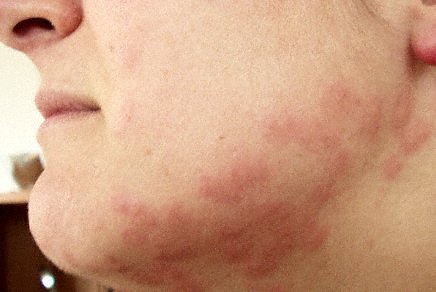
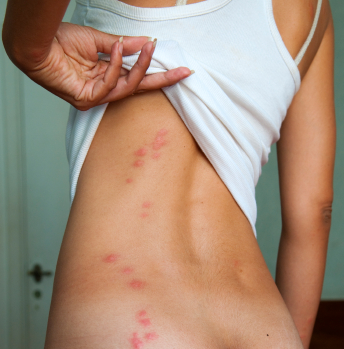
No two people react to bites in the same way, although some reactions are similar. Because of the saliva that they leave behind, the first reaction is usually severe itching and irritation. This is often followed by a raised appearance on the contacted area. Some people, however, react by having welts and hives all over the body. Still others will have small, pinkish bumps that are concentrated in one area.
Are They Bedbugs?
Doctors often misdiagnose those afflicted because it is nearly impossible to tell, if you are experiencing an allergic reaction, what bit you. Often healthcare providers and individuals that have been bitten by a member of the Hemiptera order mistake bites for those of a mosquito. The only way to discern, with complete surety, what your bites are from, is to get a sample of what has bitten you.
Some people have no reaction whatsoever to bed bugs. In addition to not having much of an effect on the elderly, some are just not allergic. Since the irritation and welting appears as the result of an allergic reaction, it is possible to not even know that you were bitten at all. It is entirely possible for several people to live in the same house, and have one person not be affected.
A person who is affected severely and are suffering from welts may have to endure it for a few weeks or even longer; severe reactions to can take up to three weeks to heal. Welts look similar to hives, and they typically appear all over the body.
Treatment for Bites
If you have been bitten and have any reaction at all, the first step is to wash the affected area with warm soap and water. If you have diluted enzyme cleaner on hand, that is more preferable to wash the bite with. You can apply calamine lotion or bentonite clay to the area to help stop the itching.
Additionally, take over-the-counter antihistamines as needed. If you experience a severe rash or welt, accompanied by tightness in the chest or difficulty breathing, consult your physician immediately. A doctor might prescribe epinephrine or antibiotics to rid the allergic reaction.
Where Do They Come From?
One of the reasons for the reemergence of these ghastly insects is due to the government’s ban of DDT. While potentially harmful to humans, DDT was very effective at wiping out bed bug populations. When federal regulations mandated extermination companies to more natural means of insecticide, they began to flourish.
The female can lay three to five eggs per day, and up to five hundred eggs in the span of its lifetime. Mating is classified as “traumatic insemination”: the male bed bug slices through the body cavity of the female for insemination.
When the female is ready to lay eggs, she will travel to protected spaces, and lay eggs in ceiling cracks, behind wallpaper, and cracks of furniture.
Infestation
Over several hundred eggs can be deposited by the female over the course of several months. The eggs will hatch into nymphs. They must go through five molts to reach the size of an adult, and each molt requires a blood feeding. Once you have a true infestation, it can be very difficult to get rid of.
When an infestation begins, it will usually be centralized in the area of the mattress; they usually do not travel long distances from their host, but they will spread to more areas in the sleeping quarters as time progresses.
Because of their flat bodies and their tendency to feed at night, they can go unnoticed for quite some period of time. They prefer hard, wooden surfaces, but they can hide in a variety of places.
Where to Look
Once you have determined that you have an infestation, there are many places in the bedroom that should be checked. Evidence of the infestation extends beyond your mattress; you should thoroughly examine behind walls and wallpaper, seams of upholstered furniture, electrical outlets, under wall-to-wall carpeting, and bed frames.
They also have the ability to travel beyond the bedroom, so all adjoining rooms should be checked for infestation. Any area that offers a layer of protection, e.g. dark, isolated areas, should be checked. They do leave excrement droppings behind, so even if they are not seen, you can often see where they have been. The best method to find them is to check only at night, and with a red light.
If you find evidence of an infestation in a room, check all drawers, suitcases, clothing, and even other people. They can easily be transmitted through infested clothing, shoes or storage containers.
If the infested area includes other animals, check them as well. Because they feed on blood that is not specific to humans, it is possible that animals can be infested as well. It is also possible to smell them, as they emit a foul odor when frightened.
How Do I Get Rid of Bed Bugs?
First, remove all affected areas such as bed linens, clothing, sheets and pillowcases and wash them in borax. For non-washable surfaces, as in drawers or cabinets, dust talcum powder on the affected area. Vacuum the area thoroughly and purchase an enzyme cleaner to clean all possible surfaces. If there are open spots or crevices in the wall, dust them with talcum powder and caulk them shut. This cleaning process should be repeated as often as possible to rid your home of the infestation.
Preventive Measures
Often, more severe measures need to be taken to prevent their return. Normal pesticides that would be successful on flies and roaches are not effective in this case. Because they have no grooming behavior, there is no opportunity for them to swallow the pesticides that have been used to treat the area.
It does not matter if your home is clean or dirty; neither affects them or their breeding habits. They are drawn to clutter, however, so they can hide themselves easily. If you find that you have an infestation, rid yourself of all clutter inside and outside near cracks and crevices.
Locating Infestations
If you cannot locate them yourself, especially if you are the landlord of rental housing or owner of a hotel, a professional may need to be sought to locate infestations. Some professionals utilize specially trained dogs to seek out these insects.
Other methods used are an interceptor-type monitoring device and sticky traps. A sticky trap is not useful in exterminating, but it can help catch and locate several so that you can be sure that you are indeed infested.
It is not necessary that you need to dispose of everything that was infested. Often, moving infested clothing and objects from one place to another can cause more infestation and be counterproductive, as they can fall off during travel. If a piece of furniture is completely infested, however, it may be in your best interest to throw it away.
Clean Thoroughly
For tough infestations, steam clean all affected areas, e.g. the mattress, bed linens, pillowcases. Take everything apart in the infested room, including the bed, drawers, and all other objects.
Everything must be thoroughly cleaned with either borax, an enzyme cleaner, or a Comet-type cleaner. The best hope for getting rid of them through the first cleaning is to use a combination of the three. Do not buy and use strong pesticides; as aforementioned, they do not work and are hazardous to humans and other animals breathing in the fumes.
Check for Bats
If, after everything is thoroughly taken apart and cleaned, you still have an infestation, other measures may need to be taken. If you have an infestation of bats, you may also have a serious infestation of “bat bugs” which are very similar to the common variety. Often, the infestation is not as strong as those caused by their cousins as they are more apt to wander and relocate.
The same borax and enzyme cleaning measures need to be taken for a bat bug infestation, but it is likely that the first treatment may rid you of this problem. If you do not have bat bugs, but an infestation of their common cousins instead, include diluted sodium borate with the enzyme cleaner during the next cleaning.
Using Temperature Controls
Both of these types of Hemiptera are sensitive to extreme temperatures. It may be necessary to rid the infestation by exposing the area to extreme heat or cold; they are most comfortable in temperatures around eighty degrees Fahrenheit. Raising the temperature to ninety-seven to ninety-nine degrees may kill off a significant portion of the population.
Death of these critters comes in temperatures ranging between one 111° to 113° Fahrenheit. If you are able to raise the room temperature to 120° Fahrenheit or above for several hours, do it; this will most likely kill the majority of the infestation population.
It is also recommended to put infested items, such as a mattress, in a sauna that reaches temperatures of upwards of 170° Fahrenheit. Similarly, they also perish in extremely cold temperatures so mattresses and other items can be cleansed of these bugs with the use of plastic wrap and dry ice. Cover the items with large plastic tarps and carefully insert dry ice, and then secure. The extreme temperature will naturally fumigate the pests.
For rooms, if it is possible to keep a room unheated for a prolonged period of time, it may kill the population. Nymphs, young adults and adults alike can survive for up to five days in temperatures of 14° Fahrenheit. Prolonged exposure to temperatures lower than 14° will kill them.
Caution Concerning Chemicals
Never treat any bedding, mattress, etc. with anything other than the treatments listed: borax, enzyme cleaner, Comet, sodium borate. Other pesticides and exterminating fluids can be harmful to humans. Even so, bedding and mattresses treated with chemicals such as borax or Comet should be left outside to dry naturally in the sun, then wrapped in plastic before next use, so as not to irritate the skin.
Borax and the like should be used as a last resort when no other methods have been successful. Pregnant women, the elderly, and infants can be especially sensitive to even these chemicals. At no point should they be breathing in these fumes.
It is also important that household pets be kept away from areas that are being treated, as they can get very ill from the toxins. Cover all mattresses and box springs with encasements that can be purchased at hardware stores for approximately $50.00
Further Safety Measures
Always wear rubber gloves, safety glasses and a mask when treating the infestation to protect your skin, eyes, and respiratory tract. Dispose of vacuum bags in sealed plastic, and rewash all treated areas with enzyme cleaner, or non-abrasive peppermint soap.
Place all items to be disposed in plastic bags in direct sunlight before disposing of them. This will kill a majority of the bed bug population and prevent them from being tracked into the dwelling again.
When to Seek a Professional
If all other options have been exhausted, you may need to seek a professional PMP (Pest Management Professional). There are pesticides that are approved for professionals to use during a infestation. These pesticides, however, are not always effective, and typically not as effective as steam cleaning, excessive heat, or excessive cold. The exterminator may opt to treat the area with carbon dioxide.
Why Me?
There are several things that you should ask yourself and several things that should be checked to prevent a re-infestation, or alternatively, if you have never had an infestation problem, measures you should take to ensure that you hopefully never will.
One: Out-of-town Trips
Did you or someone else in your home recently come home from a trip? Bugs can stow away in clothing and in the recesses of your luggage. A good preventative measure is to check lodging you are staying in immediately after arrival. As mentioned before, signs are evident, even during the daytime, include the blood-colored excrement they leave behind.
Two: Second-hand Furniture
If you have recently purchased or picked up a used piece of furniture, or have been in a used furniture store, check the item thoroughly for signs of possible infestation before purchase or before its entry into your home.
Three: Overnight Visitors
If you recently had an overnight visitor and the problem seems to be surfacing from areas where the visitor stayed, attack this area with treatment before your own sleeping quarters. It is possible, since they do not travel far on their own, that the infestation is confined to this one area.
Four: The Apartment Next Door
If you live in an apartment or multi-family dwelling, it is possible that the infestation can come in through the walls from an adjacent apartment. Inform your landlord immediately so that they may take care of the problem.
Five: Any Routine Visitor Can Bring Bugs
Be cautious of people who routinely enter your home. This includes home health aides, maids, and nurses. Transmission is possible simply by the visit of a friend or worker into your home; they need not be staying overnight or sleeping in a bed to transmit the bugs.
Six: Check School Bags
Inspect school children’s backpacks for signs of possible infestations. If an infestation is found, inspect areas near where the backpacks are usually stored.
How to Avoid Them While Traveling
It may be impossible to completely avoid them during your lifetime, but taking a few simple precautions will aid you in not carrying them home with you.
Inspect Your Hotel Room
Upon arrival at a hotel, check areas thoroughly. Check mattresses, headboards, behind picture frames, in drawers. Check every area where they like to hide. If you find evidence, including their excrement, it is possible that it is from an old infestation and not a current one.
If any evidence of infestation or prior infestation is discovered, notify the hotel staff immediately and ask to be switched to another room. Make sure the room is not adjacent to the room you just evacuated, as the bugs can easily travel through thin walls.
While you are staying at a hotel, it is best to leave your clothing packed in suitcases. Unpacking them and storing them in dresser drawers at the hotel may open up an opportunity for the bugs to get in your clothing.
Notify the Hotel Management of the Problem
If you arrive home and discover that you have brought some unwanted guests home with you, immediately notify the hotel of your discovery. Having a possible infestation in hotels and motels can be a public relations nightmare for the owners. Politely ask them to pay for any and all costs incurred to rid your clothing and home of a possible new infestation.
It is a possibility that they will refuse; however, you can always advise that you will report the building to the appropriate health authorities. Owners of dwellings are legally responsible for these types of infestations no matter how they got there. It’s always important to be well-informed of state and local laws when traveling, as well.
Treat Your Luggage Immediately
Upon arrival home, attempt to launder all clothing before bringing it into your home, using the methods described above (steam cleaning, borax, etc.). If it is already too late and you have brought your luggage into the home, unpack on a smooth surface like cement or hardwood flooring that is of a light color, so you can see the bugs easily.
Do not unpack on carpet, as eggs and the bugs can immediately attach themselves in camouflaged areas. Unpack clothing into plastic bags, and freeze suitcases if possible when they are emptied.
What Not to Do in a Bed Bug Situation
There are many myths, folklore and “home remedies” out there, but most of them are not very effective. Do not use petroleum jelly or kerosene on affected areas; petroleum jelly is ineffective and kerosene is a fire hazard.
Thyme oil may discourage the bugs, but oils have not been proven to be effective in their extermination. Using this method will only delay the length of time you have an infestation.
If you are turning up the heat or turning off the heat to get rid your home of the problem, be advised that the entire affected area must be at the extreme temperature (heat or cold) for a prolonged period of time. This method works best in dwellings that are unoccupied, or ones that are easily unoccupied.
What Not to Do While Sleeping
Do not sleep with a light on; they are attracted to the light. They feed at night because they are nocturnal, not because they are attracted to the dark.
Don’t sleep in a different room or try to vacate your residence. The likelihood of you carrying them with you to a different room, hotel, or friend’s house is much greater than just eliminating the problem.
Do not throw away a mattress or furniture and expect to be rid of the problem. They can live in many other places other than mattresses or furniture; it is likely that you will have disposed of valuable furniture and still have the
problem. Treat the affected areas with steam cleaning, borax, and enzyme solution.
Insecticide Warning
Do not apply insecticides or pesticides yourself. The legal ramification of non-licensed professional applying hazardous chemicals is far too dangerous. If you plan to treat the problem with chemicals, hire a PMP.
Finally, if you have recently been able to rid an affected area, monitor the area closely for several weeks to several months. Check for excrement droppings, and other signs of a recurring infestation.
Of course, if you continue to be bitten, it is positively certain that you still have a problem. Continue to steam clean and treat affected areas until there is no further evidence.
Follow These Instructions With Care
All in all, it will probably take the better part of three weeks to a month to completely get rid of an infestation. Don’t panic, and try to be as patient but determined as possible. Bed bugs do not have to be a permanent problem, if all the above instructions are implicitly followed.





90 Comments
Quote: Similarly, bed bugs will perish in extremely cold temperatures. If it is possible to keep a room unheated for a prolonged period of time, it may kill the population. All stages of the common bed bug, from nymphs to adults, can survive for up to five days in temperatures of fourteen degrees Fahrenheit. Prolonged exposure, however, to these temperatures, will kill them.
Thank you for this very informative article. You use the word ‘prolonged’ in the sentence above, could you be more specific about the time frame required?
Many thanks.
~~~~~~~
Response: Generally a couple weeks should be more than enough.
Go to cedarcide.com
I don’t know how to help people see this info. I want to make sure the word is spread. This is a problem for EVERYONE. So if you visit this website by chance, make sure you read this post.
They have the solution. It’s cedar oil. I saw them die almost on contact,
You just spray ($20/ bottle that lasts 2 weeks) a circle, following the sides of
your mattress with the liquid, thoroughly. They travel up the side to get to you
but die before they get there. They can last a yr without food, but they atempt
to feed every 2 or 3 days. 1 week for sure, and problem solved.
can u tell me where i could find cedar oil plz?
any health food store should carry essential oils. Wal Mart should also carry it.
o im sorry i jus reread, and seen u put the website.. thank u
Did you try the cedar oil? If so, did it work?
Poison kills them no doubt but it kills them not there eggs steam on the other hand will kill them and there eggs there exoskeleton is sensitive. You need both methods to get rid of them lucky for me they were all gone in four to five months for me.
Hey what did you did. Can you tell me the steps you took
Where can you get cedar oil
Can you buy cedar oil in the store?
Thank you so much!! Really great and useful information!!
Is there a website that can be check that has a list of hotels/motels that have had bedbug infecsatoin?
Thank you
Look on bedbugregistry.com to see lists of places with bed bug problems!
There is a site to check hotels and such for bed bugs, bed bug registry
It also helps to just search for the hotel name and “reviews.”
There will be a number of web sites and peoples’ comments tell a LOT about conditions, especially if they’ve encountered bed bugs.
True, there are just hateful people in the world who post lies, but more than one such post certainly is a heads up.
Hidden creek cabins in Bryson city nc have bed bugs I was eating alive with them I wrote a review and told them and they said if I take the review down they would give me my money back but that’s not paying for my house being treated or is it helping my mental stability
I was at a motel for a week, and had no problems with bed bugs. I then left to go to a shelter, because I had no more money to pay for a motel. The second day I went job searching all day, and started itching really bad on the back of my neck. At first I thought it was from the heat, and from me sweating. I then looked at my neck and noticed red swelling bites on my neck, and I scratched it to make the itch go away. I then noticed as the day progressed that it was spreading fast up the back of my neck. Now I’m getting worried, what is this, and why is it itching and spreading so fat. I asked the shelter workers what they thought it was and they said, I don’t know, but you can take anti-itching cream. I took the cream and put it on my neck, the itching went away, but the bites still were there. The next day I wake up and I have another bite on my upper right arm, and a bite on my right thumb. That night I talked to a resident staying there, and she said you have bed bug bites. I was so disgusted and scared. She then told me that three other people had the same problem I did, with the red bumps on their neck too, and they had left because of it. I want your advice on if I should persue legal action. Thank YoU
No, you shouldn’t pursue a lawsuit, are you kidding me. Welcome to America.
Scabies is very common in shelters. Permethrin. Cream applied head to toe then wages off in the shower the next morning should clear it up. Also ALL bedding must be washed in hot borax and ammonia water the best day. All surfaces must be wipe down with 50% water and 50% rubbing alcohol. Thorough vacuuming of the bedroom washing curtains and miniblinda. All clothes must be washed in hot water. Good luck
Head lice also bite the backs of necks. Have someone check your hair and scalp.
I work @ a hotel, and just found out that one of the rooms has a bed bug problem. I work at the front desk, and never go into the rooms. But i work third shift, and sleep in the chair in the lobby. Just wanted to know what my chances were of catching them? I will be going home and looking just to make sure. But since i work here, and its un-avoidable, what are some things i can do to protect myself from taking them home?
Girl, go. You should never sleep or even sit in common areas where people with their buggy butts sit and or sleep. I would check my bedding and you have to understand bed bugs travel from room to room and lobbies wherer people sit! You poor thing. I live in a high-rise government building and I was told never to sit in areas where people congregate. Luckily, I have a wheelchair so I just will myself down if I’m going to be in areas like that.
The only things I am able to pick up from sticky traps are very very small specks of looks like dirt.
I have had one bite in threes which cleared up in days and an occasional acne looking sore on my but and arm. I have noted in my car lots of little bites but no marks. My son does not appear to have bites. once he had one on his back that cleared quickly. I really needs some help here as I am getting obsessive with cleaning and making my child change and bath. I have checked my cat for flees and bought her a flee collar as I am thinking the stinging bites I get in the day may be from flees but no itch or real marks. Help please.
use advantage plus on your cat or frontline plus its cheaper..you cannot get rid of fleas with a flea collar & they are actually very toxic & dangerous to your cat & your child..i had almost killed my cats using over the counter flea treatments when my whole house was infested because of a neighbor and we had bought the over the counter flea dips & my cats were shaking & having seizures & the over the counter variety of advantage or frontline i think it was called zodiac they sold it to me telling me its cheaper than a vet bill for the prescription & just as effective..my cat almost died..thats when we took it to the vet because it was deathly ill from that posion..stick to the prescription brands you can even buy them on ebay or online shipped from overseas w/o a prescription thats how i used to buy them..now my new cat never goes outside & our dog & cats never catch fleas here but i sure remember what a living hell that was & how i almost killed my cats & my KIDS with the toxic posions they sell you in stores & these flea bombs..i had been using them weekly so now ihope i didnt give us all cancer or something those chemicals are neurotoxins to humans and animals.its well worth the $10 the frontline or advantage plus costs..the fleas die within a day or so & that kills the eggs and keeps them from hatching & the plus also protects against mosquitoes & ticks that may carry diseases.
A person i do daycare for has a seriouse bed bug problem i have her kids everyday i put there clothes in the dryer does this kill them?
you probably ALREADY HAVE THEM..you cant let people that you know have an infestation of blood sucking parasites in your HOUSE..im sure you already have them but a hot dryer does kill them yes but thats not going to protect you these are very easily spread they fall off their bodies or hair right into your house & if you have children with bedbugs in your home you most likely already have them..sometimes people have no idea they even have them the bites dont affect some people..other people after about 3 week get an allergy & thats why the bites swell like hives..they became allergic & that can be a dangerous allergic reaction
Yes! As long as your able to get your dryer to a temperature of 114 f plus! Your gonna need that temp for at least 30 mins and longer and hotter would be better!!!
Technically thats the facts though.. 114 degree for at least 30 mins minimum!!
So Iv taken my blankets bedding ect to a laundromat that I knew had hot water and very very hot dryers!!!!!!
The dryers im using now are so perfectly hot i have to wait several mins before i can even remove my laundry because its too hot to touch!!
Thats what you want!!!!!!!
I hate these f*ckin bed bug bites
Yes! As long as your able to get your dryer to a temperature of 114 f plus! Your gonna need that temp for at least 30 mins and longer and hotter would be better!!!
Technically thats the facts though.. 114 degree for at least 30 mins minimum!!
So Iv taken my blankets bedding ect to a laundromat that I knew had hot water and very very hot dryers!!!!!!
The dryers im using now are so perfectly hot i have to wait several mins before i can even remove my laundry because its too hot to touch!!
Thats what you want!!!!!!!
My husband works for a garbage company (this is how we think the invasion started) and at the moment they are localized to our bedroom and our bathroom. However, the first place we found them was in our headboard & footboard. It is wood with an intricate carving. We checked the mattress and box spring and didn’t find a thing. But they LOVE that wood.
It’s making me incredibly paranoid. I will go a couple of days with none, and then WHAM!! There will be six or seven and another couple more over the course of a couple of days.
They are only biting me, that I know of, as I have several “trails” of bites on my hands and feet.
Any suggestions? I’m ready to toss the lot!
Thanks!
I was at work and felt something crawling on my hip I brushed my hand and I thought it was a ant turned out to be a bed bug I was so freaked out I went to bathroom shook all my clothes out but now I feel so itchy I called my husband threw out my clothes washed my hair and stripped down in the back yard before coming in my house I was so freaked out I’m very nervous about returning back to work because of bed bugs I couldn’t sleep last night I was so itchy don’t know if its me r I got bite would I know that fast?
I just found out i have bed bugs for sire. The bug people say heat treatment is the only way to rid them. They want $1600 friggin dollars for heat treatment. I dont have that. What do i do and should i believe them?
There is another way but it takes a lot more prepping. Its chemical treatment a lot more prepping but less money
“bed bugs for sire”????? How much do you charge??????? LOL
Yes heat treatment is really the best way to get rid of bed bugs and the quickest way
My father got them from second living room furniture. I purchased over the counter raid bedbug diggers. I did a little over kill. Set off 10 Cans then a week later 10 More cans. Discarded all the furniture. It killed them all. He hasn’t had any other issues in 8 months.
Do not pay anyone 1600.00 to rid your home of bed bugs.
Thats is obserd and Im so sorry someone is trying to rob you when your going through such a terrible situation.
DIAMATIOUS EARTH
DIAMATIOUS EARTH
DIAMATIOUS EARTH
DIAMATIOUS EARTH
DIAMATIOUS EARTH
DIAMATIOUS EARTH……!!!!!!!
PLEASE EVERYONE READ!!! DIAMATIOUS EARTH IS ALL NATURAL, YOU CAN EVEN CONSUME IT INTO YOUR BODY AND IT WOULD ONLY TAKE AWAY BAD BACTERIA IN YOUR STOMACH OR OTHER PARASITES POSSIBLY IN YOUR BODY!!! DIAMATIOUS EARTH IS NOT NOT NOT NOT HARMFUL TO ANIMALS OR CHILDREN
ITS PRICE WORTHY BY A LONG LONG LONG SHOT!! 12$ FOR A LARGE BAG. SPREAD IT AROUND EVERYWHERE!!!!
DIAMATIOUS EARTH IS ABLE TO PENETRATE OR EAT THROUGH THE SHELL OF THE BED BUG AND MOST ALL BUGS AND EATS AWAY ITS SKELETON. THATS HOW i can explain it EASIEST!!
The point is this ITS MORE THAN SAFE ! ITS ACTUALLY GOOD FOR YOU TO INGEST !!!!!VERY AFFORDABLE AND VERY EFFECTIVE !!!!!
ITS JUST RECENTLY GETTING PUT ON MARKET MORE READY AVAILABLE FOR PURCHASE OF BED BUGS OR FOR ADDING TO YOUR DAILY DIET!!!!
PLEASE SHARE THIS INFORMATION.. PLEASE SHARE TO ANYONE WITH A BUG PROBLEM!!
I AM SO SICK OF PEOPLE ROBBING OTHER TO GET RID OF BUG.. F@CKING REALLY PEOPLE! GREED IS SO DISGUSTING!!!!!!!
oh my f****ng god that looks irratating wow
um bed bugs r probaly in my house im scared
First off you should ALWAYS go to pest control if you think you have bedbugs! You shouldn’t try and get rid of them yourself, 99% of the time it does not work. Plus even if you removed infected areas and wash them it wouldn’t kill the eggs. Plus bedbugs are very easy to get but very hard to get rid of. So you should never do it yourself it won’t work!
How do the bed bug react in human hair?
Please help
I recently stayed in a motel and woke up in the morning with a bunch of bites on my stomach but nowhere else. My wife had no bites. We stayed 2 nights and didn’t seem to receive any more bites. Does this sound like bedbugs or more likely spider or another insect?
Oh, hon. I’m sorry if I sound rude but hotels are bedbug heaven and spiders don’t usually leave a bunch of bites. I understand that you probably don’t want to face reality, but it sounds like bedbugs to me. People react differently to the bites. Have a pmp come to your house to check. the first check by a professional is usually free. You probably have them in your house by now. I’m so sorry
I am 60 .My only knowledge of bed bugs had been tbe old tune don’t let the bed bugs bite. I am having a serious reactionn to their bite . I have red blotches which turned into deep red pus filled holes . I am embarassed about going to the doctor. The bites are painful. I have them just about everywhere. I did just a bout everything . The purchase of high priced bed bug insecticides did nothing except poison me. I was bitten while treating a second time. These pests are horrible . They feel like stickers in my clothing. I am losing my mind. I stay in my room letting no one in. I dont want to spread these creatures to anyone. I do not kniw what to.do . I am becoming sick physically. How can I heat my home to the temputure required to kill them? Does anyone know about the product Bed Bug Barrier? They are not that much but it didnt say how many would be needed
you have to get the heat treatment on your house & wash & dry EVERYTHING you own in a very hot dryer
You MUST go to the doctor!! Please! I am worried about you!
GO to your doctor! Bedbugs are very common now; you can have the cleanest home in town and still have them. Your doctor know this! Medical professionals, like everyone else, get “creeped out” by bedbugs, but not by the people that were unlucky enough to pick them up. I’m an R.N.. Don’t suffer in silence!
I dont know if my post was received. I am using a phone its started acting weird and my comment was gone. My problem with bedbugs is so horrible I am trying again. I am 60 years old. I have never seen or even heard of someone having these creatures from hell.I am allergic to the bites. The red blotches quickly turned to deep red pus filled holes . Some arw very painful. I feel like my clothes have stickers in them. None of tje high priced insecticides for bedo bugs have did anything. I am actually losing it. I have used a lot of different chemicals because I am so terrible infected by their bite. I have not put a dent in the problem. I think I have poisoned myself. I have holed up in my bedroom embarassed of the bugs and the bjtes that cover my arms, legs back and toros. My son came by and I quickly rushed him outside. Completely puzzled he asked what’s is going on here ? I felt like the most horrible person. I just didnt want him to carry this curse home. I and in a hopess situation.
I can definitely understand. This is has been going on with us for almost a year. My hands and arms look like I have leprocy or something. Horrible blisters, rash, scabs, and bunches of “bumps” especially in my right hand. I wind up with painful blood blisters some times. I am living on benedryl and calamine lotion. I hate going out because of what I look like. I have taken to using cover up and foundation on my hands to make the mess less noticable. i have a long-sleeved summer weight sweater that I wear whenever I do have to go out.
My husband is getting sick of it too. He doesn’t have any visible bites, but he has bumps all over. He’s taken to sleeping either in the recliner or the sofa because he gets irritated when he gets bit. I’ve got tons of bumps that are not outwardly noticeable. I’m just tired of the constant itch and scratching.
I’ve tried spreading the diatomaceous earth but it didn’t work. My daughter is just starting to notice some bites she has received. For some reason, she hasn’t had anything up to this point. It’s almost like they skipped rooms. I have no money whatsoever to try and do anything about this, so nothing to do but suffer.
`i think you can rent the heat machine professtioal treatment is 300 a room
you have to get the heat treatment on your house & wash & dry EVERYTHING you own in a very hot dryer some there maybe some help to pay for it if you own your home w a no interest loan or if you rent you better tell your landlord he needs to treat his whole property & i bet he wont be happy its very expensive my moms apt bldg gets a dog checking every unit & its $850 for her tiny one bedroom..i just read a house can be $1500 to $2000 theres a hair treatment too its a very hot comb that costs about $150 a person..you cant be going to peoples homes anywhere you go youre spreading the joy
Can they stay in crevices of hard wood floors?
crevices, behind baseboards, headboards, pictures/painting frames, dressers, closets, just about anywhere where it’s dark.
First off formos the only way to kill bed bugs is from heat the only way to fully get rid of them is with the machines that are ran by propain it gets so hot you can not even be in the home at the time it also kills rouches it is a proven fact cause i use to work with someone that ran his own bed bug bis
Everyone please be careful where you sleep at and make sure you check and dry your covers every day.
Hi so I am 32 years old and never heard of bedbugs intill 2 years ago I thought if u where dirty u can get it IM a clean freak and i got them I just moved into a new place and was only there for 2 months and I am also diabetic i got real sick and was in and out of the hospital and the drs just keap saying I need to clean my house and said they can’t do anything for the bedbugs bite and made it seem that it was my fault I was like I just moved in and don’t have anything in my place yet come to find out the apartments where all in feasted with bedbugs even my dog got sick the drs put me on so many different meds I was drug up with 2 kid’s to take care of i got bit from head to toe my ho body looked like i had something I was getting bit everyday with it leveing me with swollen skin that looked red as a Apple that was on fire that I would have to jump into a cold shower and just see steam come off my body i would cry all day cause if i wasn’t in pain i was feeling things crowing all over me and my head and face but couldn’t see anything but only see little bites or some that looked like blisters that had white yellow ish puss dripping or some that popped into black hos or some that would dry up and have colors like tan brown mixed with red look like a critical and i would scratch and it felt like sharp and pain coming off my skin so I moved and have been staying in a motel for 2 1/2 months to find out they have bed bugs and now me abd my husband and 2 kid’s have been getting bit to find out for me getting bit so much I got a real bad infection called prurigo nodularis
My 9 yr old was diagnosed with PN, her nodules are so omggggg all I can do is cry and pray for her because it’s only her itching and 5 different doctors that can’t help me tell my Autistic beautiful lil girl your still so Beautiful, she cries. I tell Doctor’s she has heart disease and Autism please tell me they say I don’t know here is cream. Soooo cried out and helpless and depressed I am and so is she, please please help…
Bed Bugs can affect people differently. Some may swell,others may itch. Still others may experience pain,and some break out in hives.
Fact; Heat only works at time of “the heating”.
Fact; Heating a home increases liability of personal property.(tv warps,pictures melt,video games and dvd warp,not to mention homes have been destroyed due to FIRE caused by heating)
Fact; insecticides prove to remain effective for 3 months or longer. Continuing to kill Bed Bugs and eggs.
Fact; More cost efficient to use pesticide! Save customers money.
Patrick’s Pest Control
Anyone who is having this problem just use 91 percent isorplyl alcohol . Wash everything in. hot water and dry on hottest temperature setting. Spray your home down very thoroughly . And also spray your skin down every chance you get. And extra showers.
I just soaked my mattress and carpet with the 91% alcohol yesterday and I stripped my bed and washed and dried everything and I vacuumed my carpets and soaked my vacuum filter and Brussels in the alcohol as well.
Fact: A pest control company will say anything to get business.
Fact: DDT is the poison that kills bedbugs and it has been banned.
Do you have another kind in your possession that you are legally allowed to use in homes?
Bedbugs have become resistant to DDT, and the other class of modern insecticides that work via the same mechanism is also suffering the same fate. Crossfire is a great new product that works with a 1-2 punch mechanism. Aprehend is another great new product that works by giving the bedbugs a fungal infection that kills them from the inside out.
Not if you buy a steamer. You’re supposed to go over you furniture or affected area every 1-2 weeks for a couple of months. And then you still have a steamer for other things.
WTF are you talking about? lol. ..
This dude is retarded..
I have a situation were I have been infested in my room,I have been beaten and I have red spots all over my body, is itching at night and affected my sleeping time, I spoke to the landlord to get a treatment but they dont seem to care much, should I move to a diferent place? What do I need to do in order not to be follow into the new place? Any recomendation out there?
If you’re renting you can legally withhold rent until they fix the problem. But make sure you have it documented, (i.e. email, letter) that you have notified them you have a problem with bed bugs. Also depending on your state they can be required to pay various expenses, but you may want to talk to an attorney.
We kept feeling something crawling on us when we sat on tge couch. Then tiny bites Started appearing. After months of trying various cleaning approaches, we contacted Terminex. Their inspector found two bedbugs in the seams of a chair in the bedroom , but nothing on the sofa. They charged me a thousand dollars and steam cleaned both the bed, chair and sofa. About 10 days later, we started getting bites again. Terminex came and “dusted” the areas thus time. This continued for a a few months and them the “inspector” from Terminex said they could fund no signs of the bugs rhe last few times and he thought misquitoes were probably biting us. It has been months now and the problem has worsened. Now I get horrible welts when bitten and we constantly look for tangible signs: excrement, bugs in tape, anything before we call a different extermination company but life has become unbearable. We can’t have guests over because we fear they’ll become infected. It has been and is a truly awful experience.
thats gross
We got rid of bed bugs by ourselves. Been over half a year now, no bites, and I know that for sure because I had really bad reactions to them. Maybe we got lucky. I’m still going to detail what we did in case it helps anyone else. If you want the short version, skip to the bottom.
Around the time I started getting bites, I noticed more and more neighbors throwing out mattresses, furniture… I got suspicious. We live in apartments. I react differently to different kinds of bites so I can always tell the difference between mosquitoes and ants and such. I didn’t know what those bites were until I caught one of the little hellions crawling across the sheets.
Our place is pretty cluttered so I was freaking out. Luckily we have hardwood floors and not carpet. We tried different things. It gets really hot here, so I loaded up any nearby sheets, pillows, comforters, clothes, etc into trash bags and tied them off so nothing could get out. I put those in the car so the sun could beat heat into them all day. Never thought I’d be so thankful for Texas summers… Still got bites. We bought a mattress cover. Still got bites. We thought, okay, maybe they’re coming from the wall socket from a neighbors or something. We couldn’t close it so we kept the bed away from furniture and walls and put sticky traps on the legs. Caught NO bed bugs but STILL GOT BITES. I was losing my mind.
Kept replacing the sticky traps just in case but never caught anything other than the occasional spider. Always cycled the sheets and such using the car+sun. They were still getting to us. Bed bugs cannot fly or jump. They had to be in the bed frame. I check it over and notice rusty spotting, which is apparently bed bug fecal matter. Luckily ours was from IKEA so it was easy to take apart – and sure enough – there they were. The way my bed works is a metal frame with holes, rubber end caps fit into those holes, and wooden slats run across the frame in the end caps. So every few days I’d mix up a 50/50 mix of bleach and water in a bucket and soak the wooden slats and end caps for ten minutes. The bed bugs were gone a couple of weeks and came back. I started soaking the things longer and scraping them with a disposable spoon, which was hard to do on the end caps. It warped the wood a little but nothing too bad. After a couple of weeks or so, I stopped finding bed bugs in the frame. I was worried they were in the metal too, but I completely stopped getting bites. I think the added time and scraping got rid of eggs. Not a lot can survive a 30 minute bleach bath.
So wear a face mask and just… bleach the crap out of your bed frame. Cover the mattress, repeatedly super heat your bedding and such, and bleach bleach bleach. MAKE SURE TO CHECK YOUR MATTRESS COVER. I did kill a few trying to hide in the zipper area. I picked out the crawlies with gloves and killed them, then repeatedly did a bleach scrub in case of any eggs. I do recommend the sticky traps a lot because if you keep your bed away from any walls or furniture, then the sticky traps will let you know if the bed bugs are coming from elsewhere.
If the bed bugs are coming from someplace other than your bed, I’d sprinkle uncalcinated diatomaceous earth around cluttered areas and the walls, and bleach the crap out of surrounding furniture. What the diatomaceous earth does is basically attach to their exoskeleton, dehydrate the insect, and they’ll either die of dehydration or get shredded apart as they crawl. Unless your pet or kid would directly eat the diatomaceous earth, it is safe to be in contact with since it’s not a chemical pesticide and it’s fairly cheap.
Oh and if you’re pretty sure they’re in your mattress, use a cover and insert dry ice, it works. I didn’t have to use it but direct contact can flash freeze, and the cold will fill the cover since they make them tightly sealed and not very porous. You can usually get dry ice at grocery stores, just call around.
I can’t guarantee what worked for us will work for you, but I wish you all the best.
What kind of cover did you use for your mattress?
I never had a problem with bed bugs until my neighbor came over. I didn’t even know she had them until this past Thursday (02/09/2017). She had a brand new bedroom suit she got from Arron’s and they were putting it on the truck. Next thing I knew, they were taking it back off and putting it on the porch. We live in apartme ts so we share a porch. Anyways I asked her why they did that, and it was like she was proud of the fact that she had them. Now I have bites on my upper forearm, and I have treated my house. She knew she had them and never said anythjng. Is there something that I can do about her knowing and not saying anything? I have grandchildren that come over on the weekends.
Well.. you should be more worried about how to get rid of them .I’m dealing with this in an apartment complex right now and I can assure you..No one is proud to have them. People tend not to want to inform neighbors because then they are ridiculed and called “nasty”. I got them from neighboring apartments and the the lat thing on my mind is how to get back at my neighbors since they are as miserable as I am I’m sure. Put your energy into eradicating them instead of getting back at someone who also got them from someone else.
Yvonne Williams;
You can report your neighbor to anonymously your local health department (google that and call them). YOu must give them your phone number and address. Your local health department will:
1. If they live in a house, then they will contact them directly
2. If they live in a condo or apartment, then they will contact condo or apartment management to report this infestation of bed bugs. I believe professional exterminators must be used to get rid of hte bed bugs.
Local health dept will then be notified once the bed bugs have been eradicated so the health department can send someone out o inspect and verify bed bugs are now gone.
Bob
To relieve itching, take one tablet of Loratadine & one tablet of Ranitidine (antihistamine & acid reducer.) Take two of each if you need more. Hopefully it will help you.
@ Kimberly, I wanted to clarify a bit more with regards to the generic medications you had mentioned:
1) Loratidine (generic name) is also known as Claritin (trade name).
2) Ranitidine (generic name) is also known as Zantac (trade name).
Note: It’s always best to check with your doctor or pharmacist if you are uncertain about using medications, and/or using medications together.
I also wanted to mention three over-the-counter anti-itch skin products that have worked well for me:
1) ‘Sarna’ lotion (Original) is a great anti-itch skin product.
2) I’ve also used an anti-itch stick roll-on product (StingEze Max 2) for the relief of individual insect bites as well. (In fact, I never leave home without my anti-itch stick! – Hah)
3) Lastly, I’ve used a product called: ‘Burn Jel’ because it contains 2.0% Lidocaine! I simply apply a small dab of this ointment (using a Q-Tip) to the affected bite area, and then I cover it with a Band-Aid as well.
Note: Be sure and wash your hands and fingertips in a thorough manner after applying ‘Burn Jel’ ointment. (You don’t want to get ‘Burn Jel’ on your mouth and/or in your eye by accident.)
I need all the help I can get. I cant seem to find the actual proof of bed bugs except that Im waking up with multiple bites almost 3 or 4 times a week. I have checked under my mattress and on the walls and havent found anything. I just need to know what my first step is. How do I apply extreme heat to kill them? Are there any success stories?
Spray alcohol in your bed and around the box spring and the legs of ur bed it will dry up thier skin cell
I had bed bugs in my car. My aunt had them in her house cause my uncle brought them home cause of he works with sewage. She told be to buy 91 percent acholol and spray it and i got rid of them. I still put baits in my car just in case and nothing.
Run everything through a high temperature dryer for at least 30 minutes, vacuum the mattress diligently, do not be afraid to use bleach or a bleach/water or alcohol/water solution on hard surfaces and gently scrub the hard surfaces, you can even spray the solution on your mattress if you want. If you use a mattress protector you can use the solution on the mattress protector and wipe it dry. I worked at a shelter and we required that everything that anyone brought in had to go through the duet before it go in a room, and I am a big fan of bleach, and there was never a bed bug issue while I was working there.
I have been waking up with bites that are very itchy and turn into welts. At first I thought they were bug bites from working in the garden, or even spider bites. But they are in rows of three and my brother said they are bed bugs. I checked my mattress and found two little brown bugs, so I drug my mattress out to the garage, waiting for the garbage man.
I recently had weatherization workers in my house and I wonder if they brought them in with their equipment. The workers had to do through my bedroom everyday to get to the attic. I am embarrassed and ashamed to tell anyone I know!
I found a bug that looks kind of like a bed bug in my bed, but I don’t have any bed bug bites. So, I have no idea if they are actually bed bugs.
I have used raid deep reach, for carpet beetles and hot shot foggers for bed bugs. All in a day. 14 of them, I still have live bugs and something that looks like a off-white flying critter that attaches to things and hardens. But it feels like something that looks like a single piece of lint.I used 91% alcohol spray,they don’t like it.
I’m currently experiencing bedbugs is well and what helps the itching for me is vaporub* IT WORKS they don’t like the eucalyptus oil or menthol that’s in it RESEARCH
My wife and I started getting little red spots that looked like bites. Some I got became badly infected. Our Dr said they looked like flea bites. I set out sticky traps everywhere and didn’t catch a bug of any kind. We live in a multi 20 unit seniors complex. I hired a PCO company who brought in two bed bug sniffer dogs that didn’t find or indicate anything. The inspector did a visual inspection of the furniture and apt. He didn’t find any indication or signs of bed bugs. He said the Diatomacous Earth (Food Grade) was a good defense to put around the baseboards and in the electrical outlets to get any bed bugs that may be coming from other units. The downside is that it will only slice and dice the adult bed bugs or any other creepy crawlers. So if an adjacent unit has bed bugs they will keep coming until they reach the adult stage. The landlord got their own sniffer dog in and went through the hallway of the bldg and told us that our apt door was the only one that the dog stopped at. The long standing and professional company we hired ourselves said he never had any of his dogs stop at an apt door to indicate bed bugs. So we put Diatomacous Earth all around our apt, in, under and on our furniture and bed. We got a bed bug proof cover for our mattress. Washed and dried everything in hot water and high heat dry. Which ruined some items. We have an electric adjustable bed which is easily inspected and treated. We are still getting tiny bites every now and then which become itchy. But they are not in a group or straight line as is characteristic of bed bug bites. The bites and one or two on our arms or legs, face and a distance apart. I keep setting sticky traps everywhere but haven’t caught a bug at all. I put traps under each leg of the bed with oil in them. Nothing has shown up in those either. I have gotten up throughout the night and shone a bright light around and inspected areas and furniture but haven’t seen a bug of any kind. So for now we will continue to spread the Diatomacous Earth and vacuum it up every couple of weeks or so and replace it with new powder. Before being banned I used Diazanon, which was called the atomic bomb for killing bugs. I never had a problem with bugs while using it. I have had apts infested with fleas and the Diazanon got rid of them totally. But, like DDT, Diazanon was banned. The newer insecticides don’t have any long lasting effect and doesn’t kill bugs as it is advertised. Some bugs are stunned by it but then get up and walk away. They have developed an immunity to it. So, the Bed Bug infestations will continue to spread and torment us humans until an insecticide that has some Kill power as DDT and Diazanon had is created/discovered. The emotional and mental anguish created by having these tormenting Bed Bugs is making more ppl sick than the bugs themselves and the chemicals/insecticides that had all but eradicated them. What’s the point of avoiding chemicals that could make one sick if Bed Bugs are going to torment us and make us sick from stress and emotional anguish? If I had Diazanon or DDT I would gladly use it in my own dwelling to get rid of these blood sucking tormentors. As the old saying goes: Sleep tight and don’t let the Bed Bugs Bite. How do you stop them from biting while you are sleeping?
on yourself or your pets use tea tree oil an all natural derivative nontoxic for both you and your pets. you can find it at any pet store. Before you go buy them out it DOES NOT get rid of bedbugs. What it does do is save you and your indoor pets from bites. which is mega important health wise they don’t cause health issues but they are carriers. they treated our whole apartment complex. it was horrible. had to pack everything in garbage bags then totes. it looked like I was moving for almost three months. lol couldn’t find anything. seriously you’ll laugh but a good tip is set the legs of your furniture in tuna cans of oil. it will keep them off things. Don’t let bedding, linens, etc. touch the floor. they climb them. same for curtains. I am no expert it these do work. good luck.
I saw the first bed bug about three months ago. I was totally shocked. I thought bed bugs were a virtual myth. Me with bed bugs? They are definitely stressing me out. But I have them in my couch and in/on my computer desk. None in my bed. Months ago I put a wide swath of Diatomaceous Earth across my bedroom doorway . This product has helped. They do die if they crawl into it. I’ve got less than before but I WANT THEM GONE!
10 minutes ago I found one on my wrist…yet I haven’t seen any crawling on the computer desk. It climbed onto the mouse and up my hand? Yikes. Didn’t feel a thing. For the most part I have no bite marks but I recently developed a 4 x 1.5 inch red rash on my arm just up from my wrist…15-20 little itchy bumps..bed bug bites?Reaction to bites??
I can go a whole day without seeing one and then suddenly find 3 or 4 on the arm of the couch. Very frustrating. I can’t afford to pay a professional with a $13,000 CDN yearly disability income. Part of me wants to leave and never come back.
PS I did get a used couch….but was that the source when it was 8 months before I saw a bedbug.
I also have this problem for five years. I found a bedbug in my old apartment and moved to this new house. I still got bites after I moved. We had exterminators coming to inspect them but none of them can find any evidence. I still got bites. Four years later, an exterminator came in and said it must be bedbug and we had him to treat this townhouse. After four treatments, lasting almost three months, the issue is still not resolved. I still got bites. A year later, another exterminator came in and checked, he also said it should not be bed bug because it is so long that the whole house should be infested. Now, I still have bites, maybe once a week or once two weeks a. But some time the bites are big, some time is small. I don’t know what to do. So frustrated!!!
I liv in a Condo. I see people throwing out mattress and furniture. Some say you hey don’t have the money to pay for treatments or some say they don’t have any hem. I have had them for 4 years, I have had heat treatments., Pest control treatments. I have used everything you can think of . I have Horton rid of most furniture Please don’t post my email so everybody can see it.
Diatomaceous earth works really well if you just dust it everywhere. It eats away at the bugs exoskeleton. It will not kill the eggs though those can take up to a month to hatch and come in contact with the earth. I literally lived with white powder dusted everywhere for a month. I have lingering insecurities and sleeplessness from my experience with bed bugs. I will say diatomaceous earth is natural safe on children pets as long as you are not breathing the powder in effectively gumming up your lungs.( common sense) so please avoid the food particulate size ( that’s right it’s safe to digest) as it is a finer grain. Go with industrial particulate size.