
Bed Bug Symptoms
Bed bugs have made resurgence in the world in recent years. These nasty little bloodsuckers are disgusting and can be troublesome to anyone that comes in contact with them. In fact, this problem is considered a national epidemic. Even fine four-star hotels have found themselves facing infestations. In ancient times only the wealthiest families would find themselves to have them because these people had the warmest homes.
What are They?
This bug is a member of the Hemiptera family. The mouthpieces are made for piercing and sucking. There are at least 92 known species of them in the world today, including those based in tropical locations like Florida. This bug not only feasts on humans; it likes chickens and bats as well.
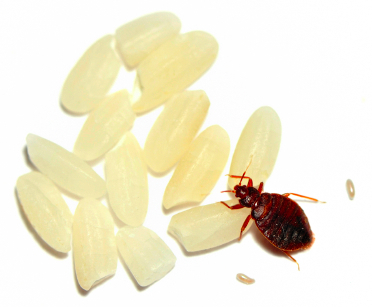
These bugs are parasites that don’t discriminate. They don’t care if you live in the most expensive house in the most expensive neighborhood in your town or in a cardboard box under a bridge. They are bloodsuckers. You are a human and you have blood therefore you are a candidate for this parasite’s next meal.
They are a bigger nuisance than mosquitoes or flies because they are more difficult to get rid of. If you have ever suffered through a flea infestation in your home, you know how difficult it is to get rid of them and how much work it entails. Getting rid of them is much more difficult.
How are They Different?
They cannot fly or hop. They simply crawl wherever they want to go. They crawl anywhere, including up walls and across ceilings. To get into different homes and hotels these nasty little parasites tend to hitchhike rides on your clothing, in your purse, or other pieces of luggage. Once in their new home they will crawl into your couch or sofa or the mattress on your bed. They can even make a home in that nice pile of blankets you have folded in your closet.
Have Bed Bug Problems?
These little insect vampires do not live on or in humans. They simply feed off of us and then head back to their home to rest and digest our blood. These tiny pests feed about once a week and it takes only five to ten minutes of sucking your blood to fill them up. The female will lay five to ten eggs immediately after feasting.
How do They Spread?
These bugs multiply by what is called traumatic insemination. This means the male bug slices through the female’s abdomen and inserts his semen directly into her body cavity.
The fertilized female will then remove herself from the population to a safer location so she will not run the risk of being further injured. It is in this place that the female will lay her eggs.
What do They Look Like?
They are sort of round or oval and are flat. They have six legs and on their head they have two mouthpieces, which are used to pierce the skin and then suck blood similar to sucking through a straw. Their color ranges from straw colored to dark red or mahogany in color to even dark brown.
The six legs are well developed and allow these critters to climb up vertical surfaces such as a wall or window although they struggle when climbing glass. Their upper body is crinkly like paper and hairy.
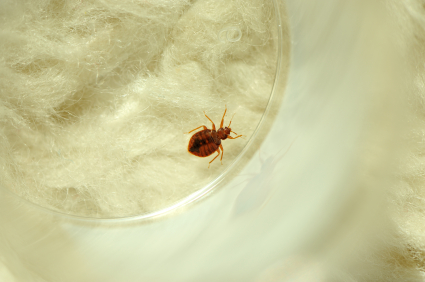
They cannot fly but have what are considered “half-wings” They have front wings that are basically scales. They have two eyes with approximately 30 facets in each. A male bug is easy to distinguish from a female because the male has an abdomen that comes to a sharp point and females have a rounded abdomen.
Common Symptoms
The first thing to do if you suspect you have an infestation is to know what they look like. The adults are brown and sort of round shaped, flat and about a quarter of an inch in length. When they have had your blood for dinner they are a dark-red color and increase in size to about three eighths of an inch.
Usually when a person suspects an infestation it is because they wake up in the morning with a bite mark of some sort on their body. If it is just one mark, chances are you had a sleep encounter with a spider of some sort.
Many bite marks that are itchy could be signs of a stray mosquito in your bedroom. They can be difficult to find in the daytime so you may have to look around for a while.
Many small, red bite marks on your upper body can indicate you are the host of a bug brothel. If you tend to have several small bite marks on your legs and feet this can mean you have a flea infestation instead.
You may not always see them. They can hide under carpeting, between walls, under flooring and other dark places. Their favorite place to call home is soft, cushiony places that are dark. When a home first contracts them they may not be seen until the population grows.
How Difficult is it to Find Them?
It may be very difficult to find them at first. Don’t be fooled though. You can see them…eventually. As the population multiplies they are easier to find. These nasty little bloodsuckers don’t like coming out during the day, just like vampires.
As the infestation grows it is not only easier to see them during the day, they begin leaving their mark on everything. You may notice a dark line, particularly in the crevices of your mattress. If you have light-colored furniture you can also see the dark lines they leave behind during their travels.
If you think you have an infestation you can test your suspicions by sleeping on a white sheet. In the morning, check the sheet for little dots of blood. This is not any blood; it’s your blood. These parasites actually inject a secretion into your skin before feeding and this can cause an allergic reaction in some people.
Where to Look for Them
They like to hide in certain places. If you suspect you have an infestation but can’t see the nasty little suckers on your mattress, you should strip all of the sheets and covers from your mattress. Next, flip up your mattress and check the top of the box springs.
If you still don’t see anything, flip up the box spring to check the underside. They like to hang upside down on the bottom of box springs. Once you have removed the mattress and box springs are removed from the bed frame check the frame thoroughly especially in the corners.
Another place to look aside from the bed is your dresser drawers. If you do have an infestation they are likely in your clothing as well as your bedding. Pull out your drawers and look in the crevices of the drawer as well as the crevices inside the shell of the dresser.
No matter how infested your home is, they can be difficult to see. Remember, they are tiny creatures. When an infestation is bad enough you will be able to see clusters of them on top of your mattress.
Other Search Tips
Another way you can see them is to inspect your mattress and other furniture at night with a red light only.
Other places to look are dark areas such as behind wallpaper that has lifted, in curtains or drapes, in stoves and ovens or any other unused appliances throughout the house, behind switch plates for your switches and outlet covers and under the tack strips of carpeting. Basically, these insects can live anywhere in your home.
Because it is possible for them to have a host other than a human host, it is necessary to make sure you caulk and seal all openings or cracks and crevices to your home. You need to ensure no rodents enter your home carrying a hitchhiking bug.
Do They Leave Marks on the Mattress?
Yes. They leave their mark behind. The first, and most obvious sign, is their waste. As gross as it sounds, it’s one of the telltale signs of bed bugs. This waste consists of different things such as blood, fecal matter, skin shed, eggs and other dead bugs.
This type of waste will show up as dark spots on the mattress, especially in the crevices or on the box springs. The waste can also be found in other areas of the bedroom or house where these little nuisances like to live.
In early infestation, are found mostly along the seams of a mattress as well as the tufts. As time goes by and the population increases, they move out and on to bigger and better spaces. They prefer to gather on rough surfaces and harbor on wood or paper surfaces.
How Long Does it Take for Bites to Appear?
These bugs only need to feed once a week so they can be difficult to diagnose. In addition, each person reacts differently to the bites and still others have no response at all.
Most people will show signs of a bite in the morning after getting the bite. The initial bite presents as a red welt similar to a mosquito bite but smaller.
Other people are very allergic to the bites and will have a severe rash-like symptom. Still others may have a delayed reaction and not show welts for several days. It can even take up to ten days for some people to show bite marks.
For some unknown reason it is unlikely for people over the age of 65 to get bitten by one or have a reaction to their bites. A survey conducted found that 42% of people over the age of 65 either did not have any bites or did not have any reaction to the bites despite living in an infested area.
How Do the Bites Appear on the Skin?
The bites tend to appear in rows of three or four and are very itchy. There are a couple of theories on why the bites appear in rows.
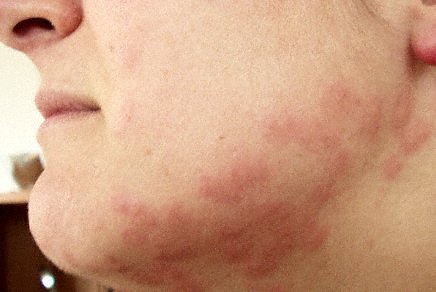
First, there is a theory that they feed while you are sleeping and when you move or twitch and the bug will remove its mouthparts from your skin. When you stop moving the bug crawl a short distance and bites again; this can result in one bug leaving several bites in a row.
Another theory is that you lay on a crease in your sheets and there are several bugs in that crease. As you lay there the bugs bite at the same time which leaves a row of bite marks.
Just because you have several bites this does not dictate the number of bugs you have. The theories above just show ways in which you can have rows of bite marks.
Can I Get a Disease From a Bite?
There have been around 30 disease pathogens found in these bugs, but none of these diseases have ever been transmitted to a human from a bite. It is considered highly unlikely that they transmit diseases. The only medical worry is the itching and swelling caused by the bites.
Another report claims that they are capable of spreading blood infesting disease organisms that can affect the nervous system and digestive system. Children who live in an infested household tend to become listless and pale.
Some disease organisms found include anthrax, plague, typhus, tularemia, yellow fever and relapsing fever.
What are Common Reactions to the Bites?
The first, and most annoying, part of a bite is the intense itching. The actual bite itself looks like a small, red, raised welt most commonly found on the upper body although you can get a bite anywhere.
Some people may have no reaction whatsoever to a bite. Other people may have a delayed reaction and not have any signs or symptoms of a bite for several days. There are a few people who are extremely allergic to the bites and will have a severe reaction.
In cases of allergy, the bites can be extremely swollen and itchy. In this case, a person may need to visit his/her personal physician in order to get steroid cream or a steroid injection to decrease the allergic reaction.
Do They Leave a Scent or Odor in the Room?
In a heavily infested room you will notice a sweet, musty smell that is obnoxious. The smell is most often the strongest under the headboard and mattress. People have equated the smell to that of rotten raspberries mixed with moldy shoes. Yuck!
As it is possible to have these insects in other parts of your home, you can have this musty smell anywhere in your house where there is furniture or pictures on the walls. They like to follow their hosts, and they will follow you. Wherever you are, that’s where they will be.
This odor is caused by an oily secretion emitted by the bugs.
How Can I Keep Them Out When I Am Traveling?
There are some simple steps you can take to ensure you don’t take the chance of bringing them into your home when you return from a trip.
First, you should never set your suitcase or any clothing or shoes on the floor of the hotel room. Instead, keep them in the bath tub, on the toilet or on the clean counter top.
Before you lay your head down to rest for the night, be sure to pull the blankets and sheets down and check the mattress for any bug waste (remember the dark lines). If you want to be really thorough you should check in the dresser drawers and under the mattress and box springs.
Spots and stains on the mattress can indicate infestation but will not tell you if it is present or in the past.
Returning Home
If you are in your own vehicle, make sure you put your luggage in large plastic bags. When you get home, immediately take your suitcase and clothing to the washer and place your clothing directly in the washer. Wash your clothing in hot water and dry them on high heat for at least 30 minutes.
After removing your clothing from your suitcase you need to put the suitcase in the garage for a day or two in case you do have any residual hitchhikers. If you do not have a garage you need to keep your suitcase outside for a couple of days.
You should also remove the clothing you are wearing and wash and dry it with the clothing that was in your suitcase. This will ensure you have gotten rid of any unwanted guests before you get an infestation.
If you were in your own vehicle when traveling you need to vacuum the seats and trunk of the car and then immediately throw the vacuum bag away. If you have a bag-less vacuum you should empty the container in the trash and then immediately take the trash bag out to the dumpster.
Getting Rid of Them
There are several things you can do to get rid of them rather than calling the exterminator.
Vacuum Daily
Also vacuum your mattress and furniture at least once a week. This is a good practice because it will also remove dust mites and skin mites.
Stay in the Same Bed, Regardless of Infestation Status
If you move throughout the house, so will these bugs. They use the carbon dioxide you exhale as a sort of honing beacon to tell them where you have gone and how to get to you for their next meal. They have trouble sensing you if you are further than five feet away from them.
They may be small, but they are fast! They can move up to 30 feet in six minutes. Moving to different spots in the house will just make your infestation more widespread.
Get a Mattress Cover That is Approved for Treating
This mattress cover should completely encase both the mattress and the box springs and should zip tightly closed. For added protection you can cover the zipper area with duct tape or masking tape. Mattress covers are not a solution, but they will allow you to sleep without getting bites and will assist you in getting the problem under control.
Be Careful Who You Visit
Never decide just to stay at someone else’s house. You could potentially spread the bugs to your friends or family.
Get Rid of All Clutter
They love to live in dark places. The more clutter you have in your home the more likely you are to have great difficulty getting an infestation under control.
Consider a Professional Exterminator
They are going to charge you a small fortune to get rid of the infestation, but you will get a guarantee with a professional. There are several treatments you can purchase to get rid of the pests yourself but you may find that these products just make them go into hiding for a period of time and then come back out when the coast is clear.
If you do decide to use a professional exterminator, ask him/her if they have a bug sniffing dog. There are an increasing number of K-9s that can sniff out these little pests. Be aware that the cost of using a K-9 to sniff them out can be expensive, but has been shown to be 97% effective.
Today, these bugs are generally resistant to all types of pesticides so getting rid of them can be extremely challenging.
Extreme Cold Will Kill Them
If you are suffering from infestation in one room in your home you can close off that room and open the windows in the winter. The adults will die in a matter of hours while the eggs will take 30 to 50 days to die. During all stages of their lives they have the potential to live for five days in 14°F temperatures.
Heat Will Also Do the Trick
Temperatures of 97°F to 99°F will kill a large amount of infestations although certain thermal death occurs around 111°F to 113°F.
If you have a large infestation you can get the temperature in your home up to 140°F for an hour or 120°F for a couple of hours.
This will normally eliminate almost all infestations. Keep in mind you may have to do this once per week for a period of time in order to eradicate the infestation entirely.
Use a steam cleaner to clean your mattress paying extra attention to the creases and crevices in the mattress itself. You can put your mattress in a sauna at 170°F to kill the bugs.
Never Cover Your Mattress With Harsh Chemicals
Instead, use baby powder or other talcum powder. They have great difficulty surviving in fine powder.
Steps to Prevention
- Keep all wood piles and debris away from your house.
- Make sure to trim the weeds and other growth that are next to the foundation of your home.
- Keep garbage to a minimum to keep rodents away.
- Seal cracks and crevices in your siding and around windows to ensure no rodent can enter.
- Make sure your attic and crawl space is well lit and has air circulation while not being accessible to rodents.
- Vacuum your house daily.
- Wash your bed linens weekly.
- Dust at least once a week.
- Store mattresses in protected areas.
- Fumigate any mattress that has been in storage with carbon dioxide before using them.
- Cover all drawers and outlets as well as all mattresses with a light coating of baby powder or other talcum powder.
Facts
- Nymphs feed on their human host for about three minutes.
- Adults feed on their human hosts for 10 to 15 minutes.
- They easily survive six or more months between feedings.
- In cooler climates, they live over one year without feeding.
- They live over 18 months without oxygen.
- They feed on other hosts including household pets, birds, poultry, and bats.
- They travel more than 100 feet to get their next meal.
- A nymph matures to adulthood in four weeks.
- The life cycle of is three to 18 months, depending on the circumstances. For example, heat will shorten their life. In addition, a minimal amount of food will decrease their life span.
- One report showed a female lived for 565 days without food.
- A recent study was conducted in Vancouver, Canada where five bugs were smashed to see if they had diseases.Three of the five were found to be carrying the super bug MRSA, or methicillin resistant staph aureus. This is the bacterium that is resistant to almost all antibiotics.The other two bugs had another type of bacteria known as VRE or vancomycin resistant Enterococcus faecium. This is another type of antibiotic resistant bacterium but it is less serious than MRSA.
- The center of an infestation is normally the sleeping area for human hosts.
- Once they find a host they normally do not travel far.
Armed with your new information you are better prepared to not only prevent them from entering your home, but you will be able to recognize even the earliest signs.
The most important step is to take action at the first sign of infestation. There are many things you can try to get rid of these pesky little critters as well as things you can do to prevent getting them. Keeping your home bed bug free means you won’t ever experience their bite.





44 Comments
Thanks for all the very useful information. Its disgusting but useful.
Baby powder suffocates them. Wintergreen rubbing alcohol kills them on contact ! Using tea tree oil around the edges of each room and outside edges of building will keep them at bay . I am a neat freak and clean freak and still got them gross lil buggers . I also heard high heat in a room kills them off as well .
Thank You for the info, it has truly been helpful, and it really works!!! as for me myself I noticed something. Was wrong because I felt so drained and tried to the point that I thought it was due to chronic fatigue because I work so much putting in many hours a day and to add to the problem I’m one of those people who don’t have any reaction to being bitten so it was very hard to discover what was the root of the problem that all changed once I finally saw one and I knew from there exactly what it was”The Cursed Bed Bug” I went away from a vacation and didn’t come back alone the thing is at the hotel I was staying in the buggers didn’t feed on me there they waited until I came home and settled in to begin my life of working long hours a day to enjoy the things I want out of life and that’s when it started on my rest day I work everyday accept on Sundays which I sleep in all day to start a new on Monday or the following week but I could not shake the feeling of being so drained and tried I was not myself anymore and I didn’t know why until I finally saw one… But now with the help of tea tree oil, rubbing alcohol and I used the raid bed bug killer I’m slowly but surely KILLING THEM and getting my life back it is and was a nightmare come true… I thought it was just a saying Good Night Sleep Tight And Don’t Let The Bed Bugs Bite… From my childhood days… Was I And Many Others Soooo Wrong… Thanks Again and I hope my story can help someone else find a piece of mind and get there life back by killing them slowly… Take Care Rich
How did you get rid of them?
my cousin mellisa has bed bugs underneath her skin, i have no idea how to get read of them please reply at my email (skylerlewey@aol.com)
scabies live under the skin
My Cousin, Mellisa, has Bed Bugs underneath her skin. I have no idea how to get rid of them. Please reply at my email…etc… There, that’s better!
Bed Bugs Do Not live under your skin. They bite you and suck your blood but Do Not live under your skin! It sounds more like Scabies that do live under your skin. I would go see a Dermatologist to get an accurate diagnosis.
I seem to have scabies and bed bugs at the same time.
Can’t understand how that happened.
I found an almost full grown bed bug and eggs when cleaned my butt tonight. Mind you I don’t know if this is possible, I had been itchy in my behind since last autumn, the doctor even looked last spring said didn’t see anything, and have been scratching almost continuously. Is it possible they’ve been there that long, but had no bites until 3 weeks ago and never saw one?
I also saw tons of black hard oval little dots on bed, looks like eggs, but not bedbug eggs.
Maybe the bites are only scabies, but have been looking at everything like crazy and that is why I saw the bed bug?
I am so freaked out.
Maybe the bedbug is feeding on the scabies???
Loaded my bottom with baby powder, thanks for the info… whatever was moving down there isn’t moving anymore….
Never had anything like this…. and I really hate bugs too…. so you can only imagine how freaked out I am.
Thanks all for taking the time to post.
Those are not bed bugs. Look up scabies.
That information was quite helpful I have been bitten by some of them and I swelled up bigger than a mosquito.
When they bite do they leave their nasty smell behind?
no
I would really like to hear a reply to the comment about bugs under her skin. I have been feeling sick and tired all the time lately ever since my roommate and I had bedbugs. I feel this is getting worse. im so frustrated andstressed out idk where to turn. my dr acted like it was no big deal and said no diseases can be transmitted by bites. Please help me.
actually they do transfer disease its rare but if feces gets into and opening like u wipe your eye or mouth without knowing it is on your hand or skin and it enters your body, due to the overwhelming epidemic spread throughout the us, a lot are denying this fact of infection, as for the bugs under the skin, I have never heard of this nor am I an expert but have experienced 4x of bed bugs which they also deny. They say there is only three species of the bed bug, when at the moment in new york there is actually a new type of looking bed bug not like any other normal ones that are ¼ inch long, oval, reddish-brown, and wingless. Their body is very flat, and they possess long, slender legs and antennae. The new ones in new york which is spreading and multiplying extremely fast has a round butt body and are not flat and dont look like a squashed oval roach, yet new york exterminators who dont know how to rid of them correctly state they are in fact bed bugs even though they dont fit the description. The bites are exact the same and the trauma is exact the same, which is three or four bites in a row usually yet can be less or more. Now after you experience bed bug trauma, not only do you experience it but your skin does too. So after they are long gone and nothing is crawling on you for many months after you will feel as if things are still crawling on you/in you. If you are feeling sick and I hope due to my late response you are in fact ok. Please find a bug specialist doctor who knows what they are talking about. I wish all the best of luck with ridding of these nasty disgusting pests. Twice I dealt with them by moving into other peoples houses. It is about the right exterminator to rid of the problem for good several times and is not cheap. Remember if its free it will not rid of your problem.
My friend has a very bad problem wst I font know nobody knows wst it is we need help w a professional will come in and inspect they want to put her in the physco ward they think she us crazy. No she not. She lost all her clothes she lost all her furniture cause of this bed bug or watever it is that’s going on. Please help us. A friend
yes you can get diseses from bed bug bites :p
i was wondering if these bedbugs bites can causes muscle spasms in adults and what kind of sickness would it be like a flue or some thing else and what kind of nerve damaged could it be in the adults and could it make the skin pigment to be eating on its self or not so i am just wondering and if any one can help me out with this please do so
I am getting bit by something at night.
But I am the only one with bites. My wide doesn’t have any.
This has been happening for about 5 years and only for a couple weeks at the end of June.
They bite for a couple weeks and then they are gone.
Should have said where you live. Where do you live?
Is there clear liquid with a bubble or yellowish liquid ?
My doctor diagnosed me with scabies before we discovered a houseguest gave us a gift of bedbugs. During that time, I was told to buy Nix or other drugstore treatment for lice. The active ingredient starts with “pyr—“…Instead of following the package directions, leave it on your whole body from the neck down, for 12-14 hours, then strip your bed, wash the sheets and clothing in very hot water, and enjoy a long hot shower. I discovered that the exterminator used the same active ingredient on our bedbug problem, and ai also discovered that while I gave myself the treatment, it resulted in dead bedbugs. Good luck…I sincerely hope this works for you.
Jackie, did you rub the contents of the live shampoo all over you!? And only for 12 hours???? How did this kill the bug itself! Is it because when feeding it ate the pest!?
I went to my friends house who knows she has bed bugs and stood in there for about 5 mins then we walked to cafe for coffee, i hugged her as we left and walked home. Later that evening about 7 hours since seeing her i itched my arm and found a little bite nark and as i itched more 5 more became noticable. They were skin coloured raised bumps and the skin around was red where i was itching and in the morning they were red! Straight away i took off all my clothes and threw them in the wash and hopped in the shower!!! Now i am so oaranoid i bought home a bed bug on my clothes and my whoke house is going to get infested as i will never find one bedbug until the problem gets bigger!!! I was sitting on my sofa and cleaning my whole house inbetween seeing my friend and finding the bites so if one was on my clothes it could be anywhere in my house!!! I took all the cushions off my sofa and sprayed all over with flea spray but im still so paranoid that there is this one bed bug in my house laying eggs and im not gonna know about it for weeks!
Why is there no edit button? This webpage is not zoomable THUS too tiny to read.
my bites are big like a mosquito. All over my body and still itching 2 weeks pass the beginning. Immediately left the house where I receive them after staying there for 2 nights since I have had no new bites just the same first ones are still itching two weeks since it started the doctor said bed bug bites are you sleeping here. I also had videos about the night it happened and the exterminator said it was a baby cockroach but on this website the picture they have of a bug looks like what I had videotaped.
My question seems picky but as you know these little devils ARE in the details…: I read “How Long Does It Take Bites To Appear” with great interest and I really appreciate the information above. But now I need to know: can one person have some bites appear immediately and others appear a week later? Or does each person have a specific reaction? It’s important because I have been home from the hotel for a week and assuming that “new bites” means that I need to treat for an active infestation in my home. (Sob.) I.e., I had a few bites show up right away in the hotel, and a few more the next day, but in the week since then I have had many, many dozen bites show up daily. I assume(d) that that means that I need(ed) to treat for live bugs in my home (exhausting!). But I have yet to see a bug or any other signs (spots on sheets or bed) even though I examined my bed and suitcase with a magnifying glass. And my husband (who was not with me at the hotel) has not had any bites. So: am I treating for an infestation that does not really exist? THANKS for any input.
I wish I could tell you!! I’m experiencing the same thing now. About 8 days after returning home from a camp trip in a cabin and a night in a hotel. First bites didn’t present until 5 days later and now I’m covered/miserable. Hubs doesn’t have any bites since I returned home, but I’m terrified I brought them home because I didn’t wash until a few days later. Any advice. What did you end up doing?
My pest control technician just came to inspect my house since a lot of bites showed up after I stayed at a hotel, and then more kept showing up randomly days later. I’ve had difficulties sleeping because I keep thinking I’m being bitten, but I can’t see anything. She said the bite marks can continue to show up for 2 weeks AFTER being bitten!!! My house was clean, phew!
You need to see a doctor. Hope you did. Sounds like scabies possibly. Depends on the bites etc.
I had my place treated for bed bugs as i had bites. I keep a very clean place so i was shocked to find 2 or 3 bed bugs on box spring after i lifted my mattress . The itch is what brought my attention. So i had a person come down and fumigate. 4 days later 1 rash on hand which is clearly a bit developing. can these bites be from before the fumigating and just took this long to show signs or do you think the exterminator did a bad chemical treatment?
I have bed bugs.. I don’t think k it is bad now but what can I do to help it not spread threw the rest of the house I dont have money for exterminator
I had my friend in my car the next day I started iching with bumps she say she got mosquitos in her apartment is it possible she gave me bed bugs I just got my apartment spray for bed bugs now I am getting the same night she get out my car
Do the bedbugs leave their heads inside of you after they bite you? How long do they lay on you after they bite?
Ticks embed their heads inside your body when they bite. When they are removed from a dog or such, if you are not careful you can leave part of them in your body when you remove them.
However, bedbugs do not like heat, so other than feeding on your blood, they prefer to hide elsewhere & are not likely to stick in your hair or stay on your body for extended periods of time.
No idk all I know is my body is tore up now from these horrible bite marks
They keep their heads on and after they feast they usually go to the nearest crease, such as couches, box springs, mattresses, etc.
Hello I’m suffering with bites all over my body they are causing me to bleed and swell up and I’m the only one in the house getting infected what should I do.. also the house was treated 3 time and still I’m getting bitten. What should I do it’s hurting and burning when I scrat
Hi I’ve covered my body in peppermint oil – it’s stops then from biting – just be careful peppermint oil smells REALLY REALLY STRONG
I stayed at a Holiday Inn in Johnson City Friday Night a week ago. I woke Saturday Morning this week itching like crazY. I totally think it’s bedbugs. I took a video with my phone of a tiny red bug running along the white sheets. THEN I smooshed it and there was a blood spot.. that’s all a blood spot. Bedbug came to mind, but not knowing much about them I wasn’t sure.
NOW I am. I read the bites can show up 10 days later. I itch like crazy, tried epsom salts, lemon, aloe.. everything. UGH. Some are swollen really huge, and my hand is covered. It traveled either from my neck down my chest and down my arm to my fingers, or vice versa. GROSS!!!!
I stayed at a hotel in Arkansas feeling just fine. But when I woke up, I was groggy, scratched my lower torso, and felt bumps! They were large, raised, and white (pretty similar to a mosquito bite). Through the day they started to turn into red splotches, in some spots they bruised into a deep purple (they , almost black in some areas. And after the first day, God, do they itch! The first encounter with the bumps happened Saturday morning, it’s now Tuesday morning, and I feel new, smaller bumps are appearing.
It’s frustrating because sometimes, when I’m stressed, I get rashes. Well, I’m definitely stressed and completely paranoid there are bugs following me or are still on me– maybe burrowing in me? I don’t know if I’ll ever feel relaxed again! I immediately bagged my luggage and washed them with boiling hot water once I got home last night. Dried them for two full, high heat settings. But I’m paranoid they’re still around. Is it truly just a rash? Are they still around and biting me? I don’t get large bumps like I had on Saturday, but small, itchy rashes, with little bumps, are forming on my inner forearms. What looks like inflamed cat scratches have appeared in the initial areas on my lower torso, there’s one on my lower back/buttocks as well. I’m not scratching hard enough to break the skin (I scratch with my knuckles), there shouldn’t be scratch marks. Is it scabies? Is it just part of the reaction to the bites, can some of them be delayed? Maybe the scratches are striae from my skin ballooning? Is it something else!?
The American healthcare system is garbage. I’m going to be so angry if it’s something that I can treat at home or with medication that can be bought OTC. I really am annoyed that I’ll be slapped with an $150 medical bill to go to an urgent care for something that could be potentially treated by myself. Hotels should really be held accountable for these matters– it’s disgusting! I’m going to job interviews and it’s really making things even more stressful than they need to be. I’m afraid to even shake people’s hand!
I live in a house with many many people and 2 dogs. I am moving I have noticed there is bedbugs so I have been putting my clothes in trash bags and taking them to the Laundromats and leaving them in a new trash bag at my mothers house till I can move I also put my flatscreen TV in a trash bag at my moms in her garage I am throwing away my bed my tables and plastic dressers away but Im really worried putting all the infested stuff in my car in bags sealed as best as I can get it. Im really worried I could end up getting them in my car.I don’t have alot of money how would I go about treating my car the best way that’s also pretty cheap?
Leave your car in the hot sun all day.
We bought a nice, used bed off of a girl on a yard sale site and have only had the thing 16 days. Today my 6 month old son and I took our usual afternoon nap and when I woke up I was going to do laundry and do the sheets so I ripped the comforter off the bed to find what looked like a bed bug in my bed. My husband and I checked our whole room over but found nothing and I’m afraid it’s a start to an infestation. The exterminator is going to come by but wants me to try to trap one first. Is there anything I can do in the meantime? Is there anything I can use to clean with or put on our bodies at night to repel them that is baby safe? So scared! Please help!
Hi all – I’m really confused . I’ve been told my bites look like bed bugs – I can’t see anything in my bed or even when I checked the bed frame. Bites do appear in 3 or 4 but seem to get bites during the day when I’m at work …. I’ve heard bed bugs don’t live on the host so find it odd I’m getting bites during the day. I also seem to feel them waking in my hair during the day … and on my body in the day time. I don’t have hair lice so I’m so confused …. do I have bed bugs ??? Or am I dealing with something else here ?? I’ve had the room treated professionally about 2 days ago and I’m still getting bites…. I don’t know wat more to do .. its making me feel depressed
I had bed bugs in my apartment after a friend stayed over with her daughter. After they stayed the night (with all of their belongings including friends daughter’s favorite blanket) She casually mentioned that her home was infested with bedbugs. I ended our friendship immediately due to my furry and rage at her. Long story short, I felt like I was going crazy due to the thought of these bugs feeding on my daughter and me. I trashed our beds, couch and purchased professional grade bedbug killer by the gallon and sprayed my home so much that I vomited due to the fumes. I did this obsessive spraying often. I used need oil around beds and we slept on air mattresses until I could afford to move. I did get rid of them before moving so as not to transfer. I checked our bodies daily for bites. I also put a powder in the walls that I bought at a animal feed store meant to kill bedbugs. My tip: Be strong and brave and know that you can get rid of them with hard work. You have to be a fierce and crazy bug killer. Now it’s all about paranoid prevention. Buy nothing used! I have even started traveling without luggage and I will never stay in any hotel (not even upscale).