
How to Treat a Bed Bug Rash
How Does an Individual Get a Bed Bug Bite Rash?
Bed bugs commonly infest summer cabins, especially at camps, hiking trail shelters and parks. Many times, when they are found in an urban home they can be traced back to a visit to one of these facilities.
These parasites are attracted to warmth, which is why they bite us as we sleep. They are also attracted to carbon dioxide, which is what is exhaled by oxygen breathing species.
They reside in dark areas and crevices near the host. Their only food is the blood they obtain from the host. Hosts for this bug are many different species of vertebrates including canaries, poultry, guinea pigs, cats, dogs, mice, bats and unfortunately, man.
How They Feed
These bugs feed on the host while the host sleeps, generally just before dawn. They will usually not be seen during the daylight hours unless the infestation is severe.
This bug will secure itself to the host’s skin using its claws and then inserts it ‘beak’ into the skin of the host. The ‘beak’ consists of two tubes (stylets); one sucks up the host’s blood while the other injects saliva (venom) in the wound.
This saliva assists in preventing the host’s blood from coagulating to keep it flowing. It also has an anesthetic to numb the feeding area on the host. This saliva is what causes the itching sensation on the host’s skin.
Have Bed Bug Problems?
Feeding Based on Age
Nymphs (adolescents) feed for approximately three minutes while an adult may continue to feed on the blood of the host for ten to fifteen minutes.
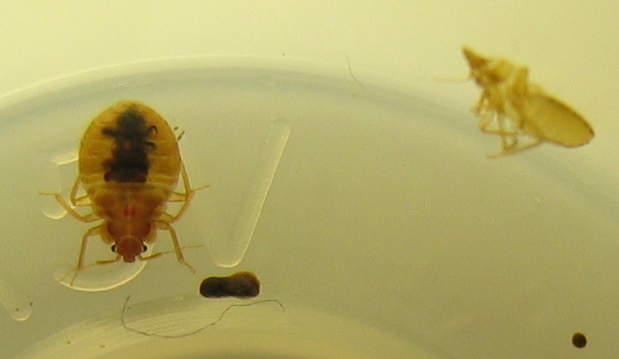
Amazingly, they can survive 18 months without any oxygen and as much as a year without any blood. The bites cause burning, itching and swelling. The degree of symptoms depends upon the host’s susceptibility.
How Common are These Rashes?
The National Pest Management Association has stated that prior to the year 2000, as few as 25% of the pest control companies in the United States had encountered an infestation of these nasty bugs. Currently that number has risen to 95%.
At this point in time 76% of the United States pest control professionals think that this bug is the most difficult pest to eradicate.
Companies that previously received one or two calls per year are now reporting that they receive one or two calls weekly.
Why has the Infestation Returned?
There are various factors that are contributing to the resurgence in the United States. Citizens are frequently traveling to foreign areas that are infested.
Second-hand furniture and furnishings have become extremely popular. Populations have increased their resistance to the various pesticides. Control has been neglected by the pest control industry since the ‘40s.
What Does a Typical Bite Rash Look Like?
When these bugs bite an individual, they can develop a rash. These rashes have the ability to cause an extremely irritating itching sensation. The actual rash is not considered to be detrimental to one’s health.
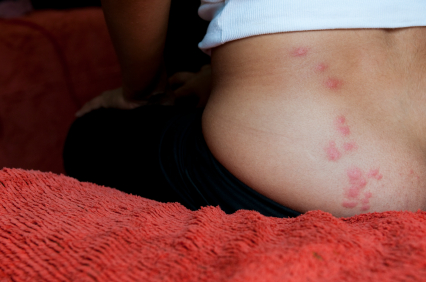
Many times a rash is mistaken for bites that are caused by insects commonly found in a household. These insects include fleas, lice, ants and mosquitoes. The truth is that the majority of individuals are not aware they have been fed on by these parasites. Many times, they assume the rash is just a skin allergy.
However, once you are aware of what to look for, it is very easily recognizable.
One of the first signs is numerous tiny or raised skin bumps. These bumps will always be in a row or cl ustered pattern. This is because they generally feed more than one time at the same location.
Other Signs to Watch Out For
The next sign is that the bites will occur nightly while sleeping and the rashes will increase daily. These rashes will usually be located on the legs, arms, neck, face and back, which are the most common areas. The reason these places are the most common sites is because these areas are usually exposed during the night. Exposed areas of the host are what they prefer.
For a lot of individuals these tiny red bumps will generally manifest hours or even days after the bite. These bumps will then begin to itch. If these bumps are scratched, the area may become inflamed because of a severe infection.
The bites or welts are misdiagnosed by many dermatologists as bites from fleas or even scabies. Only around half of the populace notices the very first bite and makes the correlation to these bloodsucking bugs.
Many reactions to bites are delayed for approximately ten days. People over the age of 65 either react less or are not usually bitten. In one survey, 42% of individuals over 65 years reported no bites or reactions even though there was an ongoing presence.
Personality
These bugs are very shy and cautious. During the night, they are attracted to the odors and warmth of the closest human being. Believe it or not, they are able to feed for ten minutes or longer non-stop!
One will consume as much as six times its body weight in blood. However, usually the individual is unaware that they are being bitten. Once they have completed feeding, they look extremely bloated and have even been characterized as animated blood drops.
Not only can bites create a rash or welts, they also have the ability to spread disease organisms that bring on digestive and nervous disorders. Allergic reactions, particularly in more sensitive individuals can occur. The have been known to carry contributory agents for plague, anthrax, tularemia, typhus, relapsing fever and yellow fever.
They have been known to CARRY these diseases; at this point in time, there is NO PROOF that they actually TRANSMIT them. Children residing in homes that are extremely bug-ridden tend to become pale and listless.
How Long Does a Bite Rash Last?
Usually, the rash will appear several hours after the actual bite has occurred. In some cases, however, the rash may not appear for days. The appearance of the rash is dependent upon the individual’s allergic reaction to the bites. For the most part, the rash will last just a few days and then begins to fade slowly.
Unfortunately, the bite rash does have the ability to last a lot longer if the individual has a more intense allergic reaction to the bites. Some individuals will not have any reaction whatsoever, while others who have more sensitivity to allergies may develop rashes that cause extreme itching as they are continuously bitten nightly.
Many times medical attention will be necessary for these individuals to eliminate the rash completely.
How Can a Bite Rash be Treated?
The swelling and redness that is associated with a bite rash does not clear very easily. However, the itching and discomfort can easily be treated with several remedies including natural remedies and medications.
Oral antihistamines and steroid creams can be used in treatment regime. These medications will help to ease the itching that is associated with the rash.
It is important to remember not to scratch the bites. Scratching the bites ONLY MAKES THEM ITCH MORE and does have the ability to cause a secondary skin infection.
Names of Medications Used for the Treatment
Cortaid
There are topical steroid creams that are applied directly to the affected area to eliminate the itching sensation. One of these creams is hydrocortisone. Hydrocortisone is available with or without a prescription. The lower strength creams may be purchased over-the-counter.
However, if the low dose cream does not work, you may need to obtain a prescription from your physician to purchase a stronger dose.
Creams Containing Dephendrydramine & Pramoxine
The optimal creams contain a mixture of pramoxine to assist with the tenderness and pain and diphendrydramine to eliminate the itching associated with the rash.
Creams & Lotions Containing Benzyl Alcohol
Lotions and creams containing benzyl alcohol may also be used to treat both the symptoms of itching and pain. These lotions and creams can be extremely effective in eliminating the itch to resolve the bite rash rather quickly.
Calamine Lotion
The use of Calamine Lotion will assist in protecting the skin while it heals. It also speeds the drying of the rash, which facilitates a quicker healing process.
Alka-Seltzer
If the individual is NOT allergic to aspirin, a cotton ball can be dipped into an Alka-Seltzer solution and then rubbed onto the bite rash to assist in clearing it up quicker.
Prednisone
Oral steroids are also useful in treating the itching. One of these steroids is called Prednisone and a prescription must be obtained from a physician to purchase this product. It is not an over-the counter medication.
Benadryl
Oral antihistamines can be very effective in relieving the itching sensation. One of these antihistamines is called Benadryl; however, these medications tend to cause drowsiness.
Therefore, this kind of medication is better used prior to retiring. It is not necessary to obtain a prescription from a doctor to purchase this medication. It is an over-the-counter product available at your local pharmacy.
Zyrtec & Claritin
There are some oral antihistamines that may be taken during the daytime and are not prone to cause drowsiness. A couple of these medications are Claritin and Zyrtec. It is not necessary to obtain a prescription for these medications either. Both are available over-the-counter at your local pharmacy.
Oral Antibiotic or an Antibiotic Ointment
If a bacterial infection occurs on the skin, a health-care provider/physician may prescribe an oral antibiotic or antibiotic ointment to treat the skin infection.
Corticosteroids, Antihistamines or Epinephrine Injections
Should an individual be suffering with a systemic allergic reaction, a physician can administer antihistamines, corticosteroids or epinephrine to the individual. *It is important to note that this condition is extremely rare.
Natural Remedies to Consider
Apply lukewarm water above 120°F or 50°C to the area that has been bitten as soon as possible. This has been known to relieve some of the symptoms.
Just by washing the rash regularly with the use of antibacterial soap helps to keep the bacteria from growing on the rash and causing an infection.
Applying a mixture of baking soda and salt to the affected areas will help to relieve inflammation.
Soaking in a lukewarm bath after adding powdered oatmeal will provide some relief from the itching sensation and reduce inflammation. A paste can be made out of the powdered oatmeal and applied to the areas affected.
A paste can be made from water and baking soda. Rub this paste on the area infected with the rash. Let the paste dry and then peel it off. This should help relieve some of the itching.
Lemon juice or Witch Hazel may be applied directly on the bites.
Home Treatment Suggestion Regimen
Wash the affected area with hot water and soap. Apply anesthetic lotion or cream liberally. To avoid welting and swelling apply ice to the affected areas.
Repeat the regimen every 6 to 8 hours until the symptoms subside.
When to Seek Medical Attention
If unsure what is actually causing the skin lesions, call a health-care provider or a physician.
If any signs that indicate a secondary infection are present, it is time to call the doctor. *Many times this secondary infection is caused by scratching of the bites/rash.
It is rare, but there have been cases of systemic allergic reactions, meaning affecting the body throughout. It is necessary to seek medical attention if this condition occurs.
Following-up with the health-care provider or physician could be necessary following a systemic allergic reaction. The health-care provider or physician may want to monitor your progress especially if a secondary skin infection had developed.
Preparing to See the Health-Care Provider/Physician
Prepare a List
Write down a very detailed description of all your symptoms.
Provide history related to any recent travel, especially international travel. Include information concerning any recent motel or hotel stays.
All the supplements and drugs you have taken including the dosage, frequency and when the last time was that you took these medications or supplements.
The health-care provider or physician will examine the areas that have been bitten.
The Life Cycle
Each female will lay from one to five eggs every day. That means that each female can lay anywhere from 200 to 500 eggs in her lifetime. These eggs are yellow/white and elongated. They are approximately 1/25” in length and just slightly curved.
Each batch of eggs is fastened on rough surfaces with cement after being laid in clusters. This process occurs several times daily in protected places such as the ceiling, floor crevices and furniture cracks. These are just a few places they deposit their eggs.
Nearly several hundred could be deposited in a period of just two months. A female will not continue to lay eggs after 11 days if she does not feed.
When Do the Eggs Hatch?
The eggs will hatch sometime between one to three weeks. The length of time prior to the hatching of the eggs will depend on the temperature where the eggs were deposited. In the warmer weather, the incubation time will be shortened. Once the eggs hatch, it is now considered to be a nymph.
Nymphs are tiny and have no color upon hatching. They have five stages. The nymph has to molt or instar five times and feed on a full meal of blood prior to proceeding to the next stage of its metamorphosis. The amount of the host’s blood that is taken at each of these 5 meals is from 2 ½ to 6 times the nymph’s original weight.
This period can continue for several weeks when the conditions are favorable or up to an entire year when there are no hosts to feed on and the temperatures are low. The nymph looks similar to an adult, only smaller and pale yellow, straw colored or white prior to feeding.
Color Changes
Once the nymph has fed, it will turn purple or red. A nymph can survive for nearly 2 months without feeding on a host. A nymph is approximately the size of the letter ‘R’ in the word ‘liberty’ that is on a penny.
The nymph will undergo a gradual and simple metamorphosis and eventually become an adult. Once they reach adulthood it will be shiny and brown.
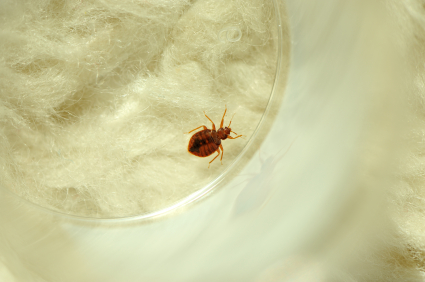
Very soon, after becoming an adult, they mate and the cycle will begin again. The adults are about as big as Lincoln’s head on the penny. An adult prefer humans as their host.
Where to Look
It is important to remember that they have a very flat body that allows it to hide almost anywhere. During the initial onset of the infestation, they are only visible around the tufts and seams of the mattress. As the infestation grows, these bugs spread out and inhabit larger and larger areas. Generally they prefer rough surfaces like wood or paper for their harborages.
These parasites can be found in a multitude of places throughout the home. However, they will not usually stray very far from their host; therefore, the bedroom would be a good place to start the search. It is usually the center of the infestation.
Favorite Hiding Spots
Some of the places they reside include dark and tight cracks in the home, in mattress seams, under buttons, in holes, inside walls, upholstered furniture ticking and seams, in or on bedside furniture, dressers, electrical outlets, wall boards, window and door frames, behind baseboards and pictures.
They can also hide out in where slats join beds, under wallpaper or borders that are loose, under wall-to-wall carpeting, under tack boards, in bed clothes, hollow bed frames and any place that is dark and isolated is a place that they would call home. Inspecting the home at night with only a red light will assist in locating the infestation.
Smell the suspicious areas; if there is a sweet smell resembling rotting raspberries you may have an infestation. This is the smell of the liquid excreted by the bug when it is afraid.
Brown or black spots of dried excrement on the bed linens also indicate their presence.
Tips on How to Eliminate Within the Home
These bugs are extremely sensitive to heat in every stage of their life. Thermal death point of a common bed bug is just 111°F to 113°F. Many times even temperatures that are lower than this, 97°F to 99° F can kill multitudes. If the temperature is raised to 140° F for about an hour or to 120°F for several hours most infestations will be eradicated.
If a steam cleaner is used to steam or hair dryer is used to heat the crevices and cracks of the mattress every week, this will assist in keeping them at bay. The mattress can be placed inside a sauna at 170°F weekly to help eliminate any bugs.
Low temperatures also kill these pests, including the eggs. These temperatures range from 32°F to 48°F and must be maintained for up to 50 days to ensure the eggs have died. The nymphs and adults will die within a few hours. An infested bedroom can be closed off and unheated during the cold weather and the bugs will be eradicated.
Vacuuming and Changing Lines
Vacuum all the areas where they routinely reside. By vacuuming all the hiding places daily, the bugs and their eggs will be removed along with their shelter-the dirt. ALWAYS be sure to place the vacuum bag into a sealed garbage bag outside.
Do this OUTSIDE of the home and immediately after vacuuming. EVEN IF THE BAG IS NOT FULL-this needs to be done EVERY time the home is vacuumed until the bugs have been TOTALLY eliminated from the home.
Change bed linens daily, or in the least weekly. Wash the bedding and the bed with Borax. The bedding should be laundered at the minimum of 120°F. Dry the bedding on high heat as well. Place the pillows and any other non-washable items in the dryer on high heat at least once weekly. Do not allow the bedding to touch the floor at any time.
Other Home Maintenance Tips
Since this bug cannot fly and only has the ability to crawl, moving the bed away from the wall would be helpful. To further protect the bed, sprinkle the bed with talcum powder. A vinyl cover placed over the mattress and the box springs will help to eliminate these bloodsuckers. Leave the vinyl covers on for at least a year.
Dust all the cracks, drawers and electrical outlets with talcum powder. Be sure to tighten, caulk and then screen all possible entry routes. Then, lightly dust these areas with Comet® or talcum powder.
Steam clean, vacuum the mattresses, or clean with Borax to remove bugs and any debris remaining. Caulk all the crevices and any cracks and re-glue any wallpaper or borders that are loose or falling down.
Vacuum all drawers and cabinets, this will also deter rodents from nesting in these areas. Consider hiring a pest control company to assist in the elimination process. These creatures are a very annoying and pernicious vermin and with an experienced professional helping, the time necessary to eradicate these pests will be shortened.
Eliminating and Preventing Outside the Home
Keep all vegetation away from the home’s foundation. This includes shrubs as well as weeds.
Move all woodpiles and debris away from the home.
Eliminate all the rodent pests and garbage outside the home.





54 Comments
Very worry about my daughter.Wnt on a trip to Georgia and south Carolina 13 days ago.As soon and we came back started having rash wrist and forearmas.Vry itchy.Have been extending to legs ,shoulder bladdes and upper arms.Doctors not sure if a bed bus bite or scabies.My grandsone have a few bites but it seems to get better.Thest rest of the group seems to be ok.
My daughter rash is gettting bigger in shape day by day.Different doctors with different opinions.
As a Nurse and mother I have tried everything.Know the more we wait it is in fact bed bug bites will be worst.
It could be a chigger bite
Did you ever figure it out. I should like your dtr , she my question below
How big is the bed bug bites you might need oral antihistamines it helps stops the itching I have the same thing but it’s not itching on and if she itch stop her she Wil get secondary infection which is bad
I have a terrible reaction to bed bug bites and my welts reappear after what I thought was healed after scratching again. My husband doesn’t get bitten or possibly he just doesn’t get the reaction I get. Now it’s time to eradicate them!
thank you i think i have bed bugs so the really helps i cant thank you enough
Yeah my daughter was stricken by these bugs while visiting her grandmother. She would come home with red bite marks all over her body. Kept her from goin there and her skin cleared up. Week later she was back and pick her up it was starting all over again. I told her to have it check it was bed bugs.
Just so that everyone knows if you think you have an infestation most places will come out and check your house for free.
Which of these places come and check your home for free?
Orkin, will check for free but it cost a lot to go with them.
Are they reliable? I’m afraid they will bring bed bugs in to get more business.
Do you know the name or names of the company who come out for free? If so please let me know.
Ehrlich does it too… we Home dyied it and they checked a year later, said we did a great job getting rid of them ourselves.
I have boxes of paperbacks, magazines and excess clothing. Should these be destroyed or recycled?
Clothing… put in the dryer on high for 30 min.
Paperbacks, magazines, put them in a zip lock bag (they have large ones) and put it in a freezer for a couple of hours. That should kill them. Or treat them in a heated room 140′ for at least 90 min. That will kill them as well.
What ever you do… don’t put them in the garbage or recycle until you have treated it. Otherwise you are just moving them to another location.
Keep them in a hot garage inside black trash bags, ideally during the summer
I am in a motel have found bed bugs in every room. Recently bitten I have a horrible rash on the back of my thigh with the bite in the middle. Should I seek medical attention? Owners are aware but gives out roach bombs I have done everything. Health dept?
Can u get bed bugs in your hair?
No typically they do not like hair and actually prefer a host without hair (shaved legs etc). I would imagine this is one reason why we have hair on our bodies. However; this doesn’t mean that 1 or 2 wont get lost and end up in your hair. But typically they will not make that their place of rest or feeding. One thing I would like to advise is that for what I could imagine was quite some time these went unnoticed in my residence and have never caused me to itch, I would awake for work with my face being EXTREMELY PALE and a neck rash that I always assumed was from shaving also if goes unnoticed they must have been a factor in my bout of extreme depression / listlessness over the past few years. The cause…. According to the exterminator was the used furniture I got a too good to be true deal on at a garage sale for my first apartment, which he was even “nice” enough to deliver. He’s lucky he’s moved since than, lord knows what I would have done. But I will never forget his face.
I have screeches I can’t find any thing on the bed looked all over with a flash light, the small bites on the red spot it looks like it could be bed bugs eve cortisone its not helping how did you got rid of it
no, those are lice.
I have experienced the bed bugs in my hair and in my Yorkie hair. Before I got rid of them. By closing off my bedroom and heating the room for hours. Then I vaccum the whole room. No more problems.
Thanks I think I’ve a bed bug rash on both of my arms.
Leida,
They’re just redbugs or chiggers.. I get them every year. I’ve lived here in SC my whole life and I have to deal with em every year about this time (late spring/early summer). Do not scratch them ! otherwise, you’ll get a nasty spreading rash ……… use alcohol or hydrocortisone cream …….don’t scratch, I know it’s hard ! you’re daughter probably has the most sensitive skin, hence the worst reaction to the bites.
Im staying with these people in another town going to school I am mid fifties, I always bring home like these brown bag like “dinners” my room got infested with ants and I cleaned it up, ever since then i have developed these very sore 1/4 in bumps on back near my right armpit its also very major on the back of my upper arm, it dose not itch but is sore, What the heck is it! Should I be concerned,Will it go away!Should I get some benedryl?My friend said it will go away in five days or so,Any suggestions?
I would guess spider bites
I am 25 yr’s old under-going some problem’s in my face which’s rashes.
Help me with possible solution (ways) that i will use to help me to be free from this rash.
Thank you so much for all the information. I just found a bed bug in my room at 5:00 AM in the morning. I have been getting these red itchy rashes for more than 2weeks . It’s extremely annoying and in spite of looking every where , I couldn’t find anything. These Biggs are so difficult to find. Now after reading this I feel they are even more difficult to eradicate.
What do u do if ur apts are infested & manager don’t do anything about it?
Call your city or town health inpespector. In most major cities it is the landlords obligation to hire a an exterminator. In the case of bed bugs I believe there is more of an urgency and most city inspectors will come out within days, now that bb’s have reached epidemic levels not only in the U.S., but in many countries around the world. In some U.S.cities there are “lanlord/tenant agreements”, which are locally legal and binding contracts that state what the obligation of a landlord and tenant is, and most contain a clause which says that repairs, maintenance, etc.,which are landlords obligations, and what recourse a tenant has when the landlord refuses to repair or maintain his rental properties. In some cases, the tenant may pay for the repairs and deduct from the rent after following various steps first, such as, notifying the landlord via certified letter, prior to the tenant paying for said repairs. Please READ your lease and call your city or town’s health department or building inspectors first,as these ordinances may vary. You can always file a case in local claims court without an attorney,after paying for the repairs,if all else fails, and moving is not an option. I am not a lawyer, and this is not legal advice. I hope this helps. Bed bugs are a public health hazard. And not taken lightly by many local elected, or appointed officials. I hope this helps.
Diatomaceous earth, food grade. Put it everywhere. You can buy it on amazon.
Great stuff to use. My former girlfriend gave me a parting gift of bedbugs she got while staying at her parents house. She was good enough to leave me some cortisone though which I needed for the first time this morning. I had being seeing bedbugs and routinely treating them for about 2 months and I had laid diatomaceaous earth around my bed and didn’t have any itching or real issues. The layer had been wearing thin and I was too lazy to respreads. Last night I slept in the nude and woke up with the worst itching and now a rash all over my body. I had been seeing bedbugs and killing them for a month or two on and off and thought what’s the big deal. Now if know!!! This is the worst case of itching I’ve ever experienced!! Luckily I have the cortisone but it’s not helping too much. I’m blasting off a bed bug bomb my brother gave me 2 months ago that I never used and respreading the diamo earth. I checked my mattress and found literally only 2 bugs a very small nymph and an adult but they must be somewhere else because my body is covered in a rash. Maybe I finally reacted to bites I had been getting in the past or more are hiding elsewhere but I’m going to rid myself of these pests. Wish I could rid the world of them!!! This itching is the worst!!
Bed bug bombs are absolutely useless.
Tried that. Didn’t help. Got it at walmart for $12.
I was at a friend’s house in the afternoon for 3.5 hrs and woke up at 3 am with severe itching, and pain, on my back. My entire back was covered in bites/rashes, clear lines and clusters. I had no idea what it was and went to the doc. Someone suggested shingles. Doc said definitely bug bites. I talked to my friend and they admitted to having seen bed bugs on the couch “recently.” Freaking out I flipped over my entire bedroom, found nothing. Washed the clothes I wore in hot water and high heat drier. I am hoping that the feeding occured during those few hours and no buggs travelled with me. All I had was me, no stuff. Can they “migrate” on people?
Freezing does not work. Studies show they go dormant even after 2 weeks in a household freezer.
There is a bedbug heater on market that can time heats – don’t be misinformed!
I’ve eradicated them twice from my life – I move a lot and had misfortune to move into infested apartments and twice stayed at hotels infested.
I’m highly allergic but have dealt with this properly.
Chemicals sometimes do not work. The proper heat method ( to all belongings ) and moving does.
It’s the only method I can stand behind.
I’ve been there -gone crazy from and come back from this.
To those who are highly allergic, I send my best hopes for you to get out ASAP from where you live.
Take landlord to court to break lease and produce specimens in court – alive!!!
Everyone who has any kind of bug inside your house should definitely buy some diatomaceous earth!!!! It works wonders. It will dehydrate any bug and kill them! Especially bedbug!!! Research it if you want too! I’m just saying from experience! !!!
This is true. I’ve used it to eliminate fleas and bedbugs. I recommend ordering the duster from Amazon along with the food grade D.E.
We are in the process of moving into a home but there was a history of bedbug infestation, the first night we slept here my daughter woke up with a rash, we have never had bed bugs before and I’m not sure if they are completely gone, the landlord claims they got rid of them months before we moved in, should I be worried about re infestation?
I think I moved into a place to I am being eaten alive at night ..calamine lotion helps but I feel for your daughter I am miserable
The is still infested, regardless of what your landlord claimed. It is a very difficult thing to completely eradicate bed bugs. I would have a serious conversation with the landlord
me and my husband just moved into a new townhouse we didn’t have thdm before but I am being eaten alive at night finally caught one I must be having a allergic reaction to the bites cause the sites swell up sometime the size of a slice of bread .I am so miserable ..calamine loyion helps
I am a home health physical therapist, I walked into a horribly dirty home 7 days ago. Bugs crawling on floor etc. since then bed bugs plus other found patient home.
Within 20 of exposure I started coming down with bumps. They started to.on my forearms but now have spread to legs. My company sent a exterminator to my home to check to make sure I didn’t spread them to my home, my home declared bug free:). They sent me to employee health where I was put on strong antibiotic and cortisone like cream to put on wounds. They are red, cluster like itchy. Frustrating thing is I keep getting more. I am so itchy I can’t sleep. Could it be something different then bugs that I was exposed to? Just frustrated with continual bites
This happened to me as well, it is likely just your body having a late reaction to bites it received days or even weeks previous to the bite’s appearance.
i wish you help,in kenya particular nairobi bedbugs are menace
Not sure how we got it since we never go anywhere. Been dealing with this for almost a year. I have terrible bites, scars, scabs and bumps all up and down both hands and arms. Have a bite on my cheek and some on my neck. Hubby has bumps that you can’t see, but you can feel them. I am going crazy itching. I don’t like leaving the house because of how I look. I use cover up and foundation on my hands to mask how bad my hands look. I wear a long-sleeved, summer weight sweater to hide the mess on my arms. Plus I can pull the sleeves down to help cover some of my hands.
I can’t wear any of my rings because my fingers have gotten swollen and they hurt. My wrists have become somewhat painful as well. I get blood blisters that hurt like anything. Those are the worst. I’m living on benadryl and calamine lotion. The calamine seems to be helping to dry them out at least. My right hand is a disaster. Especially on the skin between thumb and forefinger. I look like I’m a leper or something.
No money whatsoever to do anything about it. I’m out of work and can’t even pay my rent. If we mention the infestation to the landlord he’ll toss us out because he’s in the process of selling the building. I’m going to try and go to an urgent care place to see if I can at least get something to stop the itching. This is driving me crazy with all the itching.
Scabies are often in the exact places that you mentioned,plus they are much more painful and annoying and abundant and easier to spread on your skin than bed bug bites. See,the scabies miss actually LIVE I SIDE of your skin, where with the bed bug bites are just that…BITES. The bed bugs live at home scabies live in you. The scabies sores are also much smaller but they’re are more of them covering larger areas, exactly like you described,. With scabies, the skin irritation is caused from the mites actually burrowing into your skin to lay thier eggs. They love to do this especially in between body parts,for example in the webbing of fingers, where bed bugs don’t tend to feed there.
As far as not leaving home often, most likely you guys picked up the scabies from contact with an infected individual; most often from someone’s infected clothing or blankets or upholstery in a waiting room or restaurant or even touching an infected individual at work.
Im a health care professional for 15 years,and speaking from experience I’ve actually had both of these bug bites,and I’m 99% sure you’ve got scabies. It’s really Not as bad as it sounds; you’ve got to suffocate them out and with a layer of protection like petroleum Jelly or Vix or something similar on your skin 24/7 until they’re gone. Treat clothing and bedding etc similar to bedbugs. Diatomaceous earth is pet and kids friendly and you can also eat the food grade kind to get rid of internal parasites inside of your body, so it’s totally safe. D.e. Is better than other toxic chemicals; it’s just a respiratory irritant in large quantities, so be cautions when putting it down around your home with a brush. I would recommend wearing breathing mask or at least a bandana over mouth and noise while treating your home and until the powder settled in the rooms. Hope that helps!
I was in europe and have always been healthy and felt fine the 2 months while there, on my drive back home I started itching my arm and didn’t think much of it. During the next few days to weeks the itching turned into welts that itched like crazy and got bigger and harder within hours. The redness would then extend out apx. the size of a 50 cent piece that would form a small scab in the middle as it would heal. Then it would heal , but the next few welts would appear in different places. They would start off as itchy flat red circles that would quickly become firm and red. I sometimes would also feel stings all over . I’ve had this problem now for over a month. One dr. told me I had mites, another said I had bed bugs. I have small scars all over my body now. I used the all over cream 4 nights ago that is supposed to kill mites. The itching is still there but not quite as bad today and yesterday. I’ m going for a third opinion tomorrow. I never knew that itching can keep me from working or actually doing anything else except for keeping calamine lotion beside me and rubbing it on me every 10 minutes. Good luck to all of you that are dealing with the same nightmare.
Having dealt with the scourge of bedbugs AND fleas for many years now, I can relay that in my experience the best way to treat the rashes/welts they leave is as follows. This is especially relevant if you have allergic reactions to the bites, as I sometimes do. At the moment you first notice the itchiness or redness on your skin, if you suspect it’s a bite first try your best NOT to scratch or even itch it at all. I believe this can spread bacteria into the open wound or even further open the wound, and possibly also spread the irritant chemical from the bug further under the skin. ASAP, gently wash with cold water and soap – antibacterial soap preferred. Dry the area. Next, apply some Neopsporin or other antibacterial cream onto and around the welt. Finally, stick a Band-Aid over the area. This will help prevent you from scratching it, plus preventing the cream from getting wiped off. Repeat this procedure for any other itchy, emerging welts you discover, as soon as you notice them. In my experience, this has very often helped reduce the size of the welt and the severity and duration of the itching considerably, compared to other untreated welts I had received during the same infestation. In a few cases – and I’m still puzzled about this – after doing this procedure the welt and redness completely disappeared after a couple hours, and the itchiness was completely gone. Good luck
Very helpful article, plus everyone’s comments. I wish you all the best of luck with bedbug problems. We went to a cabin near Yosemite before Christmas and I saw bugs on the bed. Luckily we didn’t sleep there and left right away. However I’m afraid some came home with us. About 3 weeks after our trip, I got a rash on my neck, but it’s not very itchy. Haven’t seen any bugs at home, but am worried. Will try the tips in the article–any suggestions how to heat a bedroom to 120 degrees?
i have stage 4 lung cancer and fibromyalgia. While in treatment, after chemo and radiation, and right before autoimmune therapy, I developed a bad rash on my hands and arm. My oncologist didn’t recognize it, and
photographed it. A dermatologist and my family Dr. were stymied.
One night I saw a round black bug curling around my finger and put it in an empty bottle. Teminex verified that it was a bed bug. I had tried calmine, hydrocortisone, benadryl and a drying soak called domeboro, which helped some, bu not nearly enough. The itching was terrible, as well as the appearance.
Our apartment is clean, but apparently this has little to do with it. We were told to put our dry clothes in the clothes dryer for 30 minutes at a high heat and bag them tightly, spray rubbing alchoha l92% to repel them from the bed , couch covers and seat cushions, as well as to dry our bedding, curtains, towels etc., and to remove the light covers from the plugs. They were reasonable (about$400 divided into monthly payments.)They will come twice, a month apart beginning two days from now, We’ve been vacuuming daily, and tightly securing debris. We were told that rubbing alcohol, sprayed in cushions and the bottom of shoes will repel them (92%). I was told that the most common place to pick them up is hospital and doctor’s waiting rooms. I write, and have a lot of boxed papers. I’ve emptied my drawers. I’m also not sure of what to do about my hanging paintings. I have enough problems right now, and just want this to end.
I have been staying at a hotel and an apt there became empty almost a week ago. We moved into it, and on the forth day we saw a fashion all over my daughter’s arms. I did not think too much of it until later. As I sat in bed doing some reading in bed. As I got up for the restroom I saw a bug crawling on the sheets. I then began looking and saw them on top of the bedspread crawling. I have let the owners know and they have called their bug people and have a lot language of action. Do I need to do anything to prepair for the bug Guy at the apartment?
By the time I found any bedbugs after doing thorough searches with a flashlight we had an infestation its horrible!!! I am extremely allergic to the bites my kids are too. I have been out of work due to surgery and dont have much money. I ordered some stuff from bedbugbully to hopefully eradicate them but just tonight I found a few on my bed now I’m completely freaked out and cant sleep I need something that works before I lose my mind
I’m very allergic to the bed bugs I have. Does anyone know how to get rid of these spots all over my body. They are not going away. Does fade cream work? It’s been months since I started getting bit. Had terminix out here for 4 months every 2 weeks. Not getting bit much but the spots are not fading