
How to Get Rid of Bed Bugs
After several decades of being on hiatus, bed bugs have made a comeback and they’re silently lurking in homes, apartment complexes, office buildings, department stores, motels, college dorm rooms, public transportation, and even in movie theaters. Nearly all of the pest control companies have reported a whopping 70% increase in demand for extermination services in the last year.
It seems these parasitic bloodsucking bugs are everywhere. The reason that they are found all over is because they get on people’s clothing to hitch a ride to their next domicile. Although it is scary to think about going to watch a movie and bringing them home, most people do not encounter them at all. However, the potential risk is there and it is best that you know about of the places you can get these bugs so that you can properly protect yourself from bringing an infestation into your home.
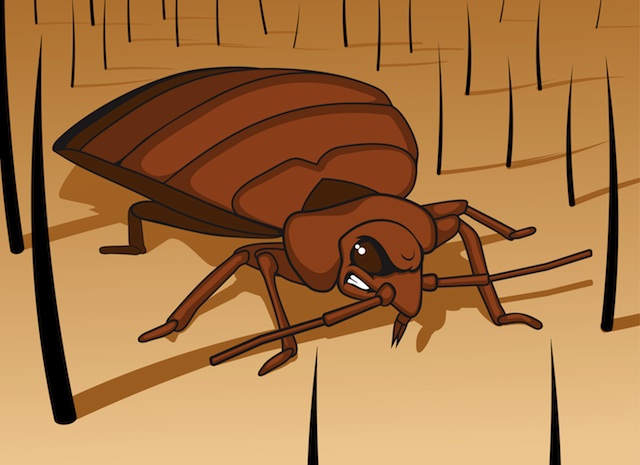
These bugs, scientifically known as Cimicidae, are tiny parasitic insects that feed on warm-blooded animals, including humans. They are attracted to the warmth and carbon dioxide that humans and other animals produce.
These insects prefer to live inside homes and they are specifically found in areas where people tend to sleep such as couches or beds, hence their name. In the home, they are found in sheets, comforters, mattresses, pillows, futons, wooden furniture, couches, and anywhere that humans sleep.
Although they are not nocturnal in nature, these creatures are active at night so that they can feed on their hosts unnoticed. They pierce the skin of the host using their stylet fascicle that is composed of the mandibles and maxillae. In essence, their fascicle is like a sharp beak. These bugs feed every five to ten days, but they can live without feeding on blood for at least a year.
Have Bed Bug Problems?
Physical Appearance
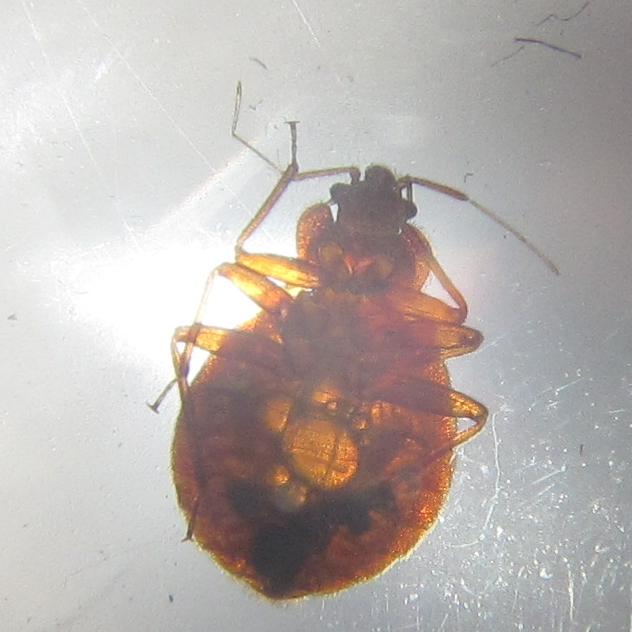
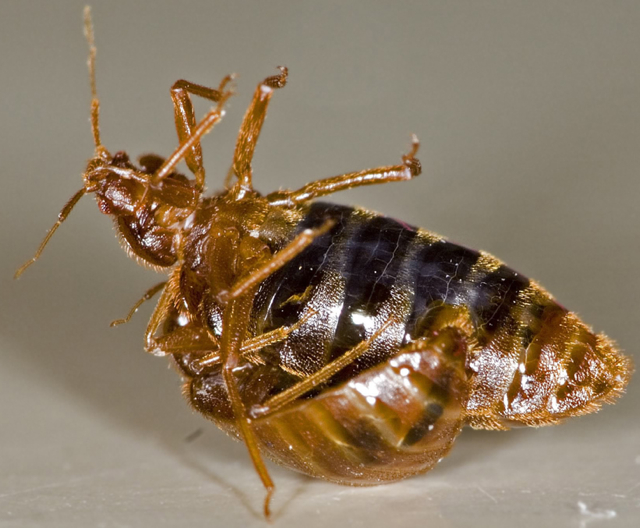
Their physical appearance varies a little depending on their age. An adult is commonly seen as being flat and oval shaped without hind wings. It is light brown to reddish brown in color and it has minuscule hairs on its abdomen. Adults grow up to 7 mm in length and up to 3 mm wide.
Breeding
These prefer warm and humid conditions, and this is the main reason why they like to live in your bed. When they breed, it is a vicious process. The male takes the liberty of slashing the abdomen of the female in order to inject his sperm.
However, they can’t distinguish between a male and a female bug, so there are times when a male will try to mate with another male. When this happens, the bug that is being attacked will emit a pheromone to scare off the offending male.
Life Stages
There are three life stages. Like most insects, they start out as an egg that is laid by an adult. A female Cimicidae can produce as many as three to eight eggs at a time, totaling almost 500 eggs in their lifetime.
That’s a lot of bugs, especially when you think about how many of those will turn out to be female to lay even more eggs! The numbers are exponential, and quite a bit unnerving to those who are trying to combat the infestation.
The eggs are about 1 mm long and they have a curved shape. Eggs are often deposited in clusters and they are attached to rough surfaces by a sticky residue in places located near the adult harborages.
The egg hatches after 6 to 12 days and then becomes a nymph, which is usually 1 mm in size and beige in color. It immediately starts looking for its first victim, but it can survive up to three months without feeding. Once it has had its first bloody meal, it turns into a reddish color that makes it look like a walking drop of blood.
It takes up to 48 days for a nymph to grow into an adult bug. Nymphs will shed their exoskeleton at least five times before it is officially considered an adult. Adults have has been known to survive for up to twelve months or more without feeding.
Survival of the Fittest
These bugs are very smart and resilient little critters. They have been known to dodge exterminators by hiding in tiny cracks where the pesticides and treatments cannot reach them.
They can also live in various temperatures. Some could live and survive for a week in -10°C and some have a high desiccation tolerance, surviving in areas with up to 40°C. Its heat threshold is said to be 46°C and would cause the insect to die within seven minutes upon exposure.
They also cannot stand high concentrations of carbon dioxide. This is ironic since the bug is attracted to it.
What are the Most Common Sources?
There are many ways that these bugs gain entry into your home. Sometimes you can pick up them up from places that you have visited, whether you traveled afar to a hotel or just to a friend’s house in your city.
They can also travel on wild animals, pets, luggage, and even clothing. So if you or anyone entering your home comes into contact with anything that has these offending insects it, you might just have an infestation to deal with.
These bugs can also travel through false ceilings and duct work in apartments, so if your neighbor hasan infestation, all you can do is just hope that the landlord hires a professional exterminator to get rid of the infestation before it gets into your apartment.
Be Careful With Used Furniture
They are famous for living in furniture such as mattresses, couches, and anything made out of wood. So if you are eyeing a nice couch, piece of wooden furniture, or mattress that has been put out to the curb, it is wise to just leave it there because it was thrown out for a reason.
You don’t want to take the chance of bringing an infestation into your home just because you want to save money and get free curb furniture. You’ll end up spending way more on the costs to exterminate than will cost you if you just bought brand new furniture.
This also goes for secondhand furniture at thrift stores and garage sales. You never know if what you are buying has bugs and eggs just waiting for their next host.
However, if you find a piece of secondhand furniture that you really want and can’t live without, you should at least pay the costs to treat the furniture with chemicals, a freeze treatment, or a heat treatment just in case it is harboring any bugs.
That’s Mighty Neighborly of You to Share!
Sharing is a very amenable quality for people to possess. But no one wants to share your infestation. If the rumor mill has started about your neighbor suffering from an infestation, be prepared because you could be the next victim.
From the moment you hear about an infestation in the neighborhood, you should start coming up with ways to prevent the spread into your home. However, more often than not, you will not be warned about an infestation in your neighborhood because of the stigma associated with it.
Nobody wants to admit to an infestation. Just keep an eye out for lots of furniture and mattresses being thrown out. If they start putting things like that out to the curb, beware. That is a good indicator that they have an infestation that they just unleashed to the entire neighborhood.
How Do I Know If I Have Them?
It is crucial to always be on the lookout for signs of an infestation. They normally like to dwell in warm places where humans sleep such as beds, futons, and couches.
Contrary to popular belief, these bugs do not care about the cleanliness of the place. They do, however, thrive in cluttered places because there are lots of hiding places available for them.
They do not live in nests, but they do stay fairly close to each other in a small group. Kairomones and other pheromones allow them to communicate with each other for congregating together in a small group and breeding.
If you suspect an infestation, just lay still on your bed for a few hours with the lights off and then turn them on quickly to catch the infestation in action. These bugs scatter when the lights turn on just like a cockroach, both of which are disgusting pests.
The Bites
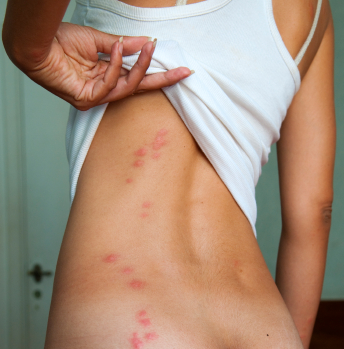
The most common sign of an infestation is getting hundreds of bites while you are sleeping. Any exposed parts of your body are vulnerable to bites. The most common feeding spots are the shoulders, arms, hands, legs, feet, neck and face.
Their presence can be really irritating especially when you wake up with tons of bites after a long night of suffering from a case of the itchies. It causes you to feel like something is crawling all over your skin, and your senses are correct: something is crawling all over you.
In the initial attack, the bugs inject you with their analgesic and anti-coagulant saliva so that you won’t be able to feel them sucking your blood. The really creepy thing about them is that they can stay on your clothing throughout the day and bite you whenever they want to. Most of the time, you won’t even notice that they are on you and you will only realize that they are if you start having mysterious bites appear during the day.
Most bites are usually seen in groups of threes. This is because one bug that has been dining on your blood becomes disturbed, and it moves to another spot just an inch away from the first bite in order to continue feeding on you. They don’t like it when you move around. If you toss and turn while sleeping in bed, you will probably notice an absurd amount of bites on your body after waking up.
Other Signs of an Infestation
In addition to bites from these little bloodsucking pests, other indications of an infestation include the presence of dark spots, blood smears, and fecal deposits on bed covers or sheets.
The dark spots are sometimes the blood of the bugs that you crushed and killed by rolling over on them or scratching at them while you were sleeping. Other times, the dark spots are the fecal matter that the bug left behind. Either way, dark spots usually indicate a bug problem.
If they live in your house, you will also see flakes. These are bug-shaped translucent exoskeletons that they regularly shed off in a process called molting. These flakes are usually found on furniture and the bed.
If you are lucky enough to detect these bloodsucking parasites at an early time when there isn’t a large infestation, you’ll have a better chance at killing them off completely so that they cannot multiply and spread like wildfire.
Once you see eggs on your mattress that look like elongated grains of rice, you should get an insect growth regulator before they get the chance to hatch and multiply in your house causing an out-of-control infestation.
Interesting Facts
These insects do not have wings and they cannot jump. So unlike other parasitic bugs like mosquitoes and fleas, they are unable to fly or jump to move from one place to another. Instead, they are able to walk fast and because they are so small, people hardly ever notice their movement.
Feeding
They may not be nocturnal in nature, but hunger is enough to wake them up so they can start searching for a meal. They can actually survive for up to 12 months or more without feeding while they are in some kind of bug hibernation period to conserve energy. However, they don’t do it on purpose. If they happen to sense something they could bite, they will wake from their slumber and bite even during daytime.
So you can forget about keeping the lights on to ward off the bugs, because they simply do not care about anything except satisfying their cravings. Though they do scatter when a light is turned on, this is merely a defense reaction because of the sudden change in light.
Heat
They are not very fond of heat. This is why they do not stay too long on our skin because the heat from the human body can be very intense for them.
Unlike lice, they approach human skin and they will bite until they are full, and then they will leave. They do not linger on your skin too long. They may, however, hide in your clothing and wait to bite you again when they get a craving for more blood.
What Do The Bites Look Like?
They bites are similar to mosquito bites. The bites cause redness, swelling, and itching in the area that was bitten.
When you get bitten by one of these little bloodsuckers, you will notice sizeable red spots all over your body. It may cause mild allergic reactions, swelling, itching, rashes, lesions, blisters, and pus to appear.
However, if the victim has a strong immune system, the bites may not cause too much of an annoyance any more than a mosquito bite would.
Sometimes bites may have no visible effects at all, or they can produce tiny red spots that can be really itchy for days. It is also possible to acquire a central hemorrhagic spot triggered by the bugs’ saliva.
Bites may also trigger other forms of more severe symptoms, and you will need to seek out a medical practitioner for proper treatment.
The Physical Effects of Bites
Besides the visible effects of a bite, there are internal effects as well. If someone has been bitten hundreds of times, it may cause the person to suffer from urticaria or erythematous rashes, and, in severe cases, it can cause anemia and anaphylactic shock.
Scientific studies have shown that they contain almost 30 human pathogens within their bodies, which is the cause of the visible symptoms. Pathogens are regarded as infectious agents. You might know them as germs, viruses, or bacteria.
However, scientists have proven that none of these pathogens can be transferred from a bug to a human upon contact. They are not closing the case about it not being able to be transmitted but, so far, there have been no known cases.
The Physiological Effects of an Infestation
Infestations may cause psychological effects such as insomnia, stress, low self-esteem, and anxiety. The victim may be experiencing severe mental stress that is caused by the financial burden of having to pay a lot of money for extermination.
Sometimes the victim develops delusional parasitosis, which is the overwhelming paranoia of these bloodsucking bugs. The fear and anxiety of being bitten may cause the person to have imaginary itches, and the anticipation of being bitten may be overwhelming for a host even if they have rid themselves of the bugs.
Delusional parasitosis may be the medical term for this paranoia, but it can hardly be referred to as delusional if you know that there’s a slight chance that the bugs may have survived the extermination and may still be crawling on your skin at night.
How to Treat Bites
One of the oldest remedies for bites is to use a mix of baking soda and water. The first step is to thoroughly wash your skin with antibacterial soap and water. Once you have cleaned the area and dried it with a clean towel, just combine the water and baking soda in order to form a thick paste, and generously apply it to the affected areas.
Once the paste dries, you will notice that the itching and the pain have subsided. If it hasn’t helped, try applying a second application. Usually, the second time around is a charm. You can also use a crushed up aspirin with water to make a paste in order to reduce the swelling.
However, if the baking soda paste and the aspirin paste don’t help you, you can try topical treatments such as calamine lotion, cortisone cream, steroid cream, and creams that contain pramoxine to relieve the itching and pain from the bites.
If the bug bites are really severe and causing your affected areas to have rashes and swell up, try taking an antihistamine like diphenhydramine and combine it with anti-inflammatory medications such as ibuprofen and naproxen.
How to Prevent Getting Them at Home
Infestations are on the rise again and it is important that you arm yourself with the necessary knowledge that you need to prevent the bugs from getting into your home.
The most important prevention method starts in your own neighborhood. If your neighbors have an infestation, it is important that they do not throw out their furniture to the curb. They should have it picked up by a truck immediately, so that no neighbors or passersby are tempted to snatch up the furniture for their own home.
Putting bug-infested furniture outside is a tempting haven for cats. Many cats will jump on the furniture and end up getting bugs on their fur. If the cat happens to be an indoor-outdoor cat and it returns to its home to be let inside, it will inevitably bring the bugs into your home.
The best thing to do is to keep your cat indoors if you hear of any rumors that the neighbors have put bug infested furniture outside.
If there is no possible way to get someone to dispose of the furniture immediately, the best thing to do is to put a sign out by the furniture that says Warning! Bug infestation! Do not take! That should clearly get the point across to deter anyone from taking the furniture.
How to Get Rid of Them
Once you find out that you have an infestation, you need to figure out a way to effectively exterminate them immediately before the situation worsens. Because the development of new bugs takes awhile, you can kill a whole colony and stop them from hatching new eggs with the right treatments.
There are two general methods for eradication; do-it-yourself methods or you can hire a professional exterminator.
Obviously, the do-it-yourself methods are much cheaper than having to hire a professional. However, depending on the severity of the infestation, trying to exterminate them yourself may not be an adequate way of exterminating the infestation. Treatments can be very costly, especially if you have an out-of-control infestation.
What About Switching Beds?
Nobody wants to sleep on their bed if they know that it has bugs. Therefore, many people who can’t afford to hire an exterminator choose to sleep on the floor or a couch in another room.
This can cause fatigue and body pains from not being able to sleep in a comfortable bed. However, it is a much better alternative to getting bitten every night.
But the solution of switching sleeping rooms to avoid the bugs will only last as long as the bugs aren’t carried into the other rooms on your clothing, shoes, bedding, or other things. Once they find out where you are sleeping, they will all come find you and start biting you again.
It’s best to just suck it up and pay the cost to exterminate them. It is possible that some exterminators offer a payment plan because of its high costs, but don’t count on that. You may need to ask a relative to help you foot the bill to pay for it up front.
Before you decide on how you are going to get rid of the infestation, let’s take a look at some of the ways to eliminate these nasty little critters.
Do-It-Yourself Methods of Extermination
Do-it-yourself exterminations require a lot of time and patience. It would entail cleaning the infested room from top to bottom. You will need to arm yourself with enough knowledge about these parasites and pesticides to be able to do the extermination yourself. A lack of sufficient information could possibly lead to devastating results such driving the bugs from one room to the other and catalyzing the spreading them all over the place.
DIY With Powder
One of the cheapest ways to get rid of them without hiring an exterminator is by using powders that were especially designed to kill bed bugs.
The normal cost of powder products is around $25 or less. It is relatively easy to use and it is environmentally safe because it does not contain harmful chemicals. Just make sure that you do not inhale the powder because it can cause complications, just like it would if you breathed in any other type of dust.
All you have to do is apply the powder on every part of your bed. Make sure to cover the mattress, the mattress seams, and the box spring base of your bed. You must also apply it to the area around the bedposts, and along the bottoms of the walls. That way, when these critters try to crawl up your bedpost or up your wall to hide in the cracks of the walls, they will come into contact with the powder.
The powder is usually composed of diatomaceous earth, which is a tiny microscopic fossilized type of algae that is crushed up so that it has jagged, sharp edges to cut up the exoskeleton of the bugs. When the bugs get cuts on their outer shells, it will cause them to dry up and die of dehydration.
DIY With Traps
Just like mice, they can be trapped. Traps can be made from simple Vaseline. All you need to do is apply the Vaseline to the legs of your bed. Though it might be messy, it is quite effective. If you want a cleaner method, then just use double-sided tape or a store-bought sticky trap that the bugs will not be able to escape from.
Another type of trap is a carbon dioxide trap that emits scents, carbon dioxide, and heat to attract them. There is a rough surface that they have to climb up, and then they land into a pitfall where they can no longer climb out.
DIY With Insect Growth Regulator
Using an Insect Growth Regulator chemical like methoprene and hydroprene stops the development of new eggs. It doesn’t cost much, but it is wise to use another extermination method with this in order to kill the bugs that are already alive.
DIY With Mattress Encasements
A more expensive way of exterminating them on your own is by purchasing encasements that seal your mattress, box springs, and pillows. The bugs will not be able to infiltrate your bed because it is sealed. If they do happen to get caught inside of the encasement, they will die of starvation.
Because they can survive for over a year without feeding on blood, you must keep the encasements on for well over a year in order to be effective. However, this is a long process and many people don’t like the idea of living with these insects for a year.
Since the bugs cannot get into your mattress anymore, they may be hiding in the cracks of a wall or wooden piece of furniture. This means that they may still come out of their hiding spots to suck your blood.
Professional Methods of Exterminating
If you are not really patient and knowledgeable enough about getting rid of these critters on your own, it would be better to hire professional exterminators so that you can save time, effort, and money. By using a professional exterminator, you can be sure that all the bugs will be exterminated without spreading them all over your house or even to your neighbors.
Many exterminators offer a guarantee that the bugs will not return for a certain number of months, and they will come back free of charge to treat the infestation a second time. Although hiring professional exterminators costs much more than doing the extermination yourself, you will be assured that the job will be done well and thoroughly.
Before the Inspection
If you decide to hire a professional exterminator, you must gather all of your furniture and put it into a pile where it can be fumigated. You will also need to take off the covers of light switches and electrical outlets because those are common spots they like to hide.
Professional exterminators will advise you to remove all of your bedding and wash it in the highest temperature of water possible to kill all the adults and their eggs. You can either let your bedding dry under the hot sun on a clothesline or you can dry it at the Laundromat in a high-heat dryer.
Once you have done this, exterminators will have a better chance at eliminating your infestation. Many extermination companies will schedule a series of exterminations to make sure that the infestation is completely eliminated.
Professional Extermination With Pesticides
There are several pesticides and treatment methods that professional exterminators use to prevent and eliminate these bugs. Many of them will use insecticides to eliminate the infestation such as dichlorvos, resmethrin, malathion, propoxur, hydroprene, cyfluthrin, permethrin, pythrethrum, chlorpyrifos, and fencalerate.
Professional fumigation is a good way to get rid of these pests but it is costly and may require the entire building to be fumigated. If you live in an apartment complex, many landlords will fumigate the entire building to eliminate the possibility of the bugs transferring to another person’s domicile. They do this because they know that bugs can crawl through the ventilation systems and the walls and infiltrate someone else’s apartment.
However, these insects can become resistant to certain chemicals if they are exposed to them. If you have used a chemical pesticide that effectively killed some of the bugs in your home, it might not work the second time around. They might have become immune to it or they may have retreated deep inside the cracks of your walls or wooden furniture to avoid extermination.
Because of this, they are very difficult to get rid of. The bugs are so smart that they can detect a pesticide and stay away from it for up to a year or more.
How Do They Resist Pesticide Treatment?
Some are smart enough to vacate the area that has been sprayed with pesticides and they will settle into another part of the home or building where the pesticides are not being applied in order to avoid extermination.
Since they can last for over a year without feeding, it is common practice for them to just hide and wait until the chemical pesticides have dissipated enough to the point where it is no longer effective in killing the bugs. Chemical pesticides usually linger for about three months and the bugs will hide until they no longer sense the chemicals.
Another reason why they survive the first round of extermination is because many people only use pesticides and other treatments in the areas where they know they have a problem. However, they can be anywhere. Even if just a few of them are in another room, all it takes is for a male and a female to mate and you’ll have another infestation on your hands.
Professional exterminators have taken into consideration that they may develop immunity to chemicals and they will adjust their methods of exterminating them accordingly. They now have more advanced methods to combat infestations that involve freezing, steaming, and heating.
Professional Extermination With Heat and Steam Treatments
These bugs cannot survive excessive heat. This is why many exterminators choose to do a heat or steam treatment. They will die after just seven minutes of being exposed to extreme heat over 46°C.
Professional Extermination With a Freezing Treatment
Just like high temperatures, these bloodsucking insects cannot survive low temperatures either. It is one of the most effective ways of getting rid of an infestation. Professional exterminators will use a cryonite freezing machine that subjects the bugs to temperatures of -32°C in order to effectively kill them. Within 15 minutes, the adults and the eggs are killed.
How to Avoid the Risk of Pests While Traveling
These offending bugs are found in many hotels, motels, inns, and B&Bs in every state and province in North America. They are also found in other countries too. Protecting yourself from these nasty little critters takes travel smarts and diligence. There are precautions that you must take in order to avoid or minimize your risk of coming into contact with them.
What To Do Before Your Trip
Before you book your hotel, you should go online and read the reviews of customers who have recently stayed at the hotel. Many people who have encountered these insects are nice enough to report their findings online so that every potential customer of the hotel will know that the hotel has an infestation.
Check out sites like BedBug Registry, TripAdvisor, and IgoUgo for hotel reviews. Also keep in mind that the bugs do not discriminate between a dirty motel and a high-class luxury hotel, so regardless of how much you are paying for the room, you are never assured that you are getting a bug-free room.
It is also recommended to purchase a hard-shelled suitcase because it has fewer folds and seams where they can hide. You should also pack all of your belongings including your clothes, shoes, and electronics in sealable plastic bags, and only open them when you need to access the items.
Some people also bring a big plastic trash bag and tape so that they can cover their luggage and other items securely. Though this is an extreme measure, you are better safe than sorry.
Before Settling Into Your Hotel Room
First and foremost, do not put your luggage on the bed or the floor when you first walk in. This is the most common mistake that people make, and if there are bugs in the room, your luggage will be the first thing that they crawl on.
For this reason, it is best to place your luggage on top of a dresser or a table, or even on the top shelf in the closet. But the securest place is on the bathroom floor or inside the bathtub.
Once your luggage is secure, thoroughly check the entire room for signs. They like to lodge themselves in cracks, crevices, folds, and ruffles.
Where to Check
When you arrive, pull back the covers of the bed and inspect under the linens and pillows. Use a flashlight if necessary. Be sure to check the entire bed including the box spring, mattress (especially the seams), the bed posts, the frame, near the walls, and the headboard.
Also check all of the furniture in the room, especially the wooden and pleats of fabric furniture because these bugs have been known to hide in the crevices. These bloodsuckers can also reside behind wall hangings, such as mirrors and paintings.
You should also check the electronics like the alarm clock and the television, since they are attracted to heat. It may be a tedious process, but it is the only way to truly avoid them while traveling.
What to Do If You Notice Them in the Hotel Room
A hotel that has these bugs in one room may have them in many other rooms too because the bedding gets removed and taken to the hotel’s laundry room. Moving the infested bedding can cause them to fall off along the way to the laundry room, and they will scamper off to find their next habitat fairly quickly.
If you notice signs like fecal matter, tiny blood spots, or skin molt from, it is best to grab your things and leave before bugs hop onto your stuff. You can simply go back to the front desk and ask for another room that is far away from the room that you were assigned.
When switching hotel rooms, do not accept a room that is directly adjacent to the infested room; these bugs easily migrate to neighboring spaces via housekeeping carts, wall sockets, and luggage.
Each hotel has its own protocol regarding pest control. Many hotels will distribute fact sheets, assure proper treatment of affected areas, and offer you alternative accommodations.
You should also ask the hotel management to vacuum out your luggage, apply proper treatments, and wash everything with the hottest water possible to kill these insects and their eggs, as it was the hotel’s negligence that caused you to have to go through this awful experience in the first place.
When You Get Back From Your Trip
Even just a few of these critters can start a full-blown infestation if you inadvertently carry them back to your home.
You should conduct a thorough inspection of your luggage outdoors or in the garage to ensure that you are not bringing them into your home. Pay special attention to pockets, linings, and seams. Then thoroughly vacuum or steam clean the bag before stowing it away in your house.
Wash all of your clothes even if they have not been worn in the hottest water possible, and dry them on a high heat setting for at least 30 minutes. This will kill any previously undetected bugs.
You should also have someone inspect the clothing that you are wearing because you could unknowingly have them on your clothes.
iPhone Application
Technology is one great way of spreading information about the problem infestations. Although these bugs have existed for centuries, not too many people have enough information about them to protect themselves from getting an infestation in their homes. There are even some people who have not heard about them and only know about them from the saying, “Sleep tight; don’t let the bed bugs bite.”
Now available from iTunes, there is a new application that provides information to iPhone users about these bugs, the symptoms of bites, and how to locate them in your house or hotel. This is very helpful information that is needed by people who travel a lot. The application also provides information on how to prevent and eliminate them.
Extermination: The Final Frontier
After reading this article, you should have a good idea of what these bloodsucking parasites look like, where they come from, how to detect them, how to prevent them, how to treat the bites, and how to exterminate them. Though you could try to eliminate the infestation on your own, it is best to just call a professional company that can come in and take care of everything for you so that you don’t have to worry about a thing.





75 Comments
My family brought home bed bugs from spending a day in Dallas over a year ago. We went to so many places that I can’t figure out exactly where we got them. At first we thought we all had mosquito bites and didn’t realize it was bed bugs until it was too late. My husband and I got rid of our mattress first and I treated my sons room then ours. It was good for about a month. Then I found them in the living room couch and recliner. I went to the DIY store and got some dieatious earth and treated the entire living room and furniture. Soon my sons room got them. I put traps under there bed feet, but they had already gotten into the mattress. This has been the most exhausting battle and is driving my husband insane. Everyday I do the linens and put all the pillows into the dryer for 1 hour. They are not as bad as they were but I can get rid of them myself. My aunt caught them from her son having a sleepover. They hired an exterminator as soon as they figured it out, but there car got infected, and a week after the exterminators the bugs were back in the house. Just sharing my experience should anyone care to know what I have gone through that your not alone.
Hi Lisa, I know you posted this in 2013 but, I’m dealing with them now, a friend visited and left us a gift. We live in Nyack, NY in a housing complex since I got sick and could no longer afford the costs of apartments here. I have been feeling sorry for myself since moving in here, a nice place, beautiful village but, after where I lived for 24 years directly across the street from Helen Hayes home that Rosie O’Donnell had purchased for awhile. I was in a small apartment in a big old home but, I never had a bug problem. Now, being on a fixed income I’m dealing with this. I know I babbling and I thank you for listening if you read this lol, I just want you to understand how I’m freaking out. We have to use the exterminator the complex uses but, the great thing is we don’t have to pay for it. Now, my question to you is. How many times did you have to have the exterminator return? This one has been here 4 times and we saw 2 again this morning. Again, thank you and I hope you read this or someone will and help me!!! From, mentally stressed Gloria
I’m suffering from this infestation now, I realized I had them when my son keep getting bit, then I saw 1 crawling on wall, so embarrassing, can’t really afford a exterminator, but did you have to be out of your home for days when exterminator treats it.
“Now, my question to you is. How many times did you have to have the exterminator return? ”
You took a really long time to get to such a simple question
Im internally paranoid.
I pray yall are able to come out of it.
I follow up evry 3 to 4 months since 2018.
But as of this month i will be spraying some room weekly or bi weekly.
Internally or Eternally? I think you meant the latter but I guess both can make sense in a way.
~ To those saying it’s embarrassing, I get where you’re coming from but in my experience an infestation was caused by factors out of my control such as an aging alcoholic Neighbor who formerly Was chronically homeless And was always kickin it at the shelter with the ole gang; unfortunately for me he brought home even more friends and oddly Enough readily admitted the problem had originated from his unit like it was a badge of honor! Just guessing but I’d say 9 times out of 10 people get bedbugs due to behaviors and lifestyles of people they don’t even know, and while yes it is “embarrassing” to have them but it’s not your fault and I bet you many people know what it’s like as they’ve had the issue too. In the end, It took me 3 months and two total scourings of my apartment to finally be rid of them. I’m only just remembering how mentally draining and stressful it was at the time plus all the other aspects of life That doesn’t just get out on hold while you’re attempting to cope oh, and parenting thrown on top..
~~ That was 4 years ago, only months after moving into this apartment, we are now in the midst of another infestation in the middle of this coronavirus pandemic and I’m already anxiety stricken about how this may play out mentally- not to mention thinking of what to do next In the never ending list of bed bug extermination, I pray to god I can get on top of it and it doesn’t last 3 months like last time.
I found this web site useful and fascinating. My daughter and grandson just discovered that they had them and we are on a mission to irradicate! We are hiring a professional (to show up today) but at least we can say we are arming ourselves with knowledge.
Thank You.
Orkin did the heat treatment but I still have them they said they would come back and stray. But that was two days ago. I fell that should heat again i have a 30 day guarantee but jet they are just saying they will spray. I just want to move I can;t sleep it is awful for me. I am thinking about going to my friends to stay until they die in a year because I can not handle this any more I would not bring anything to my friends so see does not get them I dont know what else to do
Thats terrible. I thought the heat treatment was the best. I know the feeling, ive bern sprayed twice. I got bit last night.
if these critters are so smart to hide in cracks as crevices, than you must get your houses surface temperature up to around 120* F or at -35* F depending on which method you choose. it dose not seem to me that air temp is going to be very affective to get rid of the critters that are hiding . next is , how do you safely get your house + 120* F this is a very dangerous temp. to try and achieve. then there is the other – 32*C is roughly -25* F to get a temp like that inside your home cant be an easy thing to do if you live anywhere so. of Canada
Very interesting, but it sounds as futile as achieving world peach. I have some bites around my waist. I am thinking they are bedbugs. But, I do have indoor outdoor cats and they all sleep on me.
Do they bite the cats as well? I will look for the iPhone app/
Thanks for the information!
If you live in Metairie, Louisiana … ***DO NOT*** RENT ANY apartment that is owned by central realty. We pay RENT – they do not spray. Therefore … we have BED BUG AND GERMAN COCKROACH INFESTATIONS THAT ARE NEXT TO IMPOSSIBLE TO RID OURSELVES OF!!! TOO DAMNED POOR TO MOVE TOO!!!
Food grade Diatomaceous earth will kill both. Read my comment on how
I got rid of my bug problem cheap and fast.
I have used diatomaceous earth also and am so happy to know about it. It’s so inexpensive and does such a great job of killing the insects. It’s great, but not perfect. I am also going to try to use heat to totally eradicate them.
How
Where do u get this
Hey get on do my own pest control . Contact public health and make a report, also what the landlord tenant law states. Most property managers are responsible to treat, but you might end up paying. If the whole place is bad . Bring HDept. To declare unsanitary. I wrote and notifyed
Apt. Complex, cited ordinance, statues and sent certified mail
They final let me out of lease. There are ways to get your issue done as a whole.
What about putting lime around your house outsiide. I live in a renovated log cabin. Just recently ive found blCk, tiny red and med yellow, just in my bed on top of the sheets and pillowcases. Im washing sheets now. I did spray room and house with lasol.
Didnt have this problem on campus back in the day. 1 more thing, ive been ill..a few times i laid cross the bed with “outside clothes on”. Hope you can help me do some dyi, unemployed.
I hear ya. We’ve been dealing with this for a year. We don’t have the money for an exterminator, either. My husband & I are both out of work. I must have at least 1,000 bites on just my hands. It’s embarassing to go out. I put cover up make up on my hands & wear long sleeves when I go out. Can’t go swimming because of all the bites on my legs. It has been a nightmare.
Cimexa dust it’s less then 15 bucks on amazon. Also if you have the funds get a dual acting pesticide. READ labels before applying.
I would like to know about experience in getting rid of bed bugs by airing shoes in the hot sun. How long should they stay in the sun? Where did you sun them? Its’ either that or my having to throw away perfectly good and expensive shoes.
It takes 60 minutes of 140 degree heat! So the sun won’t work. If you spray the inside of the shoes with 91% alcohol, it will kill them and the eggs! Hope this helps. Read the comment I left.
Hi I was scrolling down to see if I could find tips on how to treat my shoes (I love my shoes!!! I don’t want throw them away) I’m going to try the alcohol spray; also do you have any tips on how to treat a dining room table? I haven’t seen any on my table but you never know. Thanks
thank you very much
I found bites on my son 4 months ago and found I had bed bugs in his bed. I panicked, but did a lot of research. In just 3 weeks they are all gone!!!! I bought all of the items on Ebay. Total cost was around $75.00. I purchased mattress covers with zippers, FOOD GRADE diatomaceous earth 2 pound size, 91% alcohol at Walmart, spray bottle, and travel bottle sold for shampoo or lotion with flip up cap. First I sprayed both bedrooms with the alcohol. I watched the bugs die in front of my eyes. I filled the bottles with a spoon with the DTE. Next I dusted the DTE around the baseboards and around the bed frame and around the bed legs. Then I dusted the mattresses and put the covers on the mattresses and box springs. I dusted a barrier around the bedroom doors. They only bite at night when you sleep. Your bed is your safe zone. Nothing goes on the bed unless it goes in the drier for 60 minutes on high heat. It fries them! It is now month 4 and haven’t seen any bugs. Found some dry dead bodies. When the bugs crawl thru the DTE it shreds their bodies and drains the fluid out. You can leave the powder down for as long as you want as long as it does not get wet. If it does just re-apply. I am going to leave it down for 6 months to be 200% sure!!!! I hopes this helps others to get rid of bed bugs CHEAP and 100% effective safe way!!!!!
I am having trouble with the microscopic nymphs! Any ideas on how to get rid of those once and for all?
Go to Pest supply store
Do you put all bedding in dryer 60 minutes daily?
Put all fabric items in dryer on high.
60 min is good or however longer your comfortable.
Hi Robert:
My question to you is, 1) can you update us on the status of your situation? Just wondering if they have come back. And, 2) Did you spray the ENTIRE floor and room (base boards, etc…) with the alcohol? I just don’t see how that would be possible with such a small spray bottle and the large amount of space that must be treated.
We have them and when it was discovered in my brothers room, his mattress was so infested it could not be saved. Instead of closing his room off, my Mom was so disgusted she moved the mattress out and they started bagging stuff in sealed containers to be thrown out. The room was vacated and has now been sealed off. However, I’m pretty sure this is what caused them to spread as I have them now and my room is located 30 to 40 feet from his. Since we have 4 rooms that could be infected overall, your method would take so much time, energy and probably cause back problems 🙁 from leaning over for so long. Any suggestions are much appreciated.
Thanks!
Mary
I’m sure you have treated your problem by now…but in my opinion, you need a professional. Trying to do it at home takes too long, and gives the BB’s time to reproduce……A LOT! I found an exterminator who guaranteed his work to do it for $350 and he is wonderful. My problem is gone. It was a lot of money to come up with, but well worth it.
I wish it was 350$ where I live
What if they are in your couches? Do you sprinkle DTE all over them? Ugh I believe they are bed bugs that bit me because my mother gave us a bag of Halloween decorations which I didn’t want knowing she had bed bugs but she said she checked and there was none….when we got home two crawled out of the bag but we killed them…I believe somehow they got on our clothing on the way home. Please help!
Thanks for the info…I discovered I had a minor infestation between my matress and bed frame I used the alcohol trick and saw those little bastards shrivel up and die within seconds, just waiting for my order of DTE to arrive within a couple of days. And to everybody else I can only recommend that you follow Roberts advice and approach….cheap and effective!!
Would the alcohol spray work for a “quick fix” in a hotel room we HAVE to stay in for 3 days that have reviews about bed bug problems? Will leave luggage in the car. Thanks in advance!
I no its been a long time now, did u ever get them back?
Just pure alcohol?
Thank you, Robert for your success story. You’ve inspired me beyond belief that it is possible to get rid of them!! I’m so happy I found your post. Getting all those things now. Thank you and good luck to us all!!!
So I’ve had them for like 8 months now. We have tried our best to get rid of them but we find them again. I have a small infestation. We have become experts now, knowing where they hide and knowing what to do. Our last attempt was last week. We ended up buying a power portable hot steamer. We got steamed our couch and then searched cracks and crevices. We saw some bed bugs and saw they were dead. Power steamers get too 200 degrees and it will kill them if you use it very slowly over any area you want to treat.
After we did that (took hours) we then sprayed the crevices of the couch with some bed bug spray from a local externination place. Not sure if we are okay yet. We haven’t found any so far but it’s not like they just crawl around the house. It’s a waiting process to see if anyone gets bit. We are going to repeat the treatment with the hot steamer soon. The hot steamer I bought works well. It was 120 dollars, which is a lot cheaper than exterminators.
Brandon, can you post the brand name and model of the steamer you bought? We need one too, and for the same reason, alas…… Thank you.
Dont see a post, but try McCullough, or shark , or steam fast 560. Most steamers should be stating if u can use it for bedbugs and telling you how hot it gets. If it, then call them and ask.
robert did you spray the diatomaceous and the alchol in the same spray bottles
I am SO. INCREDIBLY. SICK. OF. THESE. GOT. DAMN. BUGS. IN. MY. GOT. DAMN. HOUSE!!!!!!!!
We have had them for 4 years now!!!!
We’ve tried the DTE, we’ve tried the sprays, we’ve tried the mattress covers!
Sure, all that stuff kills them!
But it definitely DOESN’T GET RID OF THEM!!!!
The only other option here is to hire an exterminator, but that’s easier said then done! -______-
We live pay check to pay check.
Don’t exactly have the extra cash to spend on that at the moment…
But how can you go to sleep at night knowing that you’re about to have however many bloodsucking bugs crawl all over you?!
UGHHH, my god… it truly makes me sick to my stomach! :'(
Oh yeah, I’m posting this comment at 4:30 AM because I woke up due to itching.
And what do you know? I have a bite mark on my right hand!
You see, I sleep with full length clothing… regardless of the season, just to avoid getting bit!
That’s right! So when it’s 95° outside, I’m sweating my butt off when I really shouldn’t have to, just because of these annoying pests!
We obviously don’t have central air, so life is a struggle man! 🙁
You’re reply reminds me of that movie “Snakes on a Plane”! Lol I’M SICK OF THESE MUTHERF***IN BUGS IN MY MUTHERF***IN HOUSE!!! LOL
I’m right there with you Nicole! My husband & I are both out of work. Not a single penny to spare. It’s 3:22 am. I have been up since 1:30am. I get them IN my clothes. I even have a turtleneck on & found one trying to crawl inside my neck. I have scabs and scars head to toe. I must have close to 500 bites on my hands alone. This has been going on for a year and I’m sick of it all. We’re hoping that I get a fairly good tax refund in March so we can get an exterminator in here. (((HUGS)))
Cimexa on amazon $15 or less. And if you can buy a dual acting pesticide. Also Google “williams method” he has some diy cheap co2 detectors you can make.
I have sprayed my car with deltamethrin. Harris bed bug and lice killer it is a broadcast spray. Let me say it again a broadcast spray. I threw alot away, but they followed me into my car. I’m really hoping this works. I used an entire gallon of deltamethrin in my car. I use weather proof containers from the container store. I wipe everything down with 91 percent by volume rubbing alcohol. It seems the nimphs go everywhere. I don’t suggest throughing things away unless they are clutter. The container helps to quarantine bed bug free items. The broadcast spray is helpful. If it ruins something I’ve sprayed it on, well I’ll buy it again. That is when I have money again. Kinda lol.
Im sorry Nicole. That really sucks. Ive had them for over a year. In that time, I have moved twice. Each time I have moved, I threw everything I own away except for dishes, pots, important papers, photos and a few bags of clothes I wash and dry on high heat, then bag before leaving. I have bought a cheap cot and put mattress covers on them everytime I move. I want to cry because I moved and I still have them because I am getting bit. I have done everything I could and still cant get rid of them. I feel i will have them for life. I hope you are rid of them. I just wanted to contact you because I was looking for people like me who still have them after years.
I have had it with these things we have tried do it yourself and exterminators and my husband found one this morning. We have a 3 month old baby and he hasnt been bit yet as far as i know but i dont want him to either it brings me to tears now uugghh! We live in a duplex and we started noticing them in fall of 2013 we did the do it yourself method first cleaned everything the apartment itself, clothes, sheets,.pillows we had no couches or chairs at the time curtains everything sprayed the base boards with high alcohol spray and put DTE down and covered our mattress with a bed bug cover and left our clothes in bags which is hard when you looking for a certain shirt or pants, months went by with out seeing them then i vacuumed some of DTE up and they came back the same week! So we then called an exterminator which of course cost alot! We cleaned everything again and left our clothes in bags, got the whole house exterminated and saw them again within 30 days! called them back. They came back out a second time did just our apartment since the neighbors swear they havent seen them or have any bites. We put DTE after the second treatment was done and didnt see them again for many months and i only vacuumed a little in the living room where we have not seen them yet we have only seen them in our bedroom and they came back but in our bedroom where i haven’t vacuumed the DTE yet!!! and this was around the time when our baby was born so once again we called the exterminators back and they keep telling us they dont whats going on and dont know why we keep seeing them so they came out for a third time and used some different treatment that is suppose to stop them from reproducing that was like a month and a half ago and my husband saw one this morning i cant take this anymore i wanna burn all of our stuff and start new but we are already in debt from having the baby and me being off work for so long if you have any advice it would be greatly appreciated just so tired of this and dont want my poor baby boy to get bit
Did u get rid of them?
All great tips. Thanks for sharing this great resource. I always recommend that people always check the hotel bed mattress lip before sitting on the furniture and making sure they put their suitcase in an appropriate area.
Hi I have recently moved in this new place one of the best plush place to rent. I never had any bug problem initially. But since the day I moved in started having a lotta of bite marked erythematous patches with clusters all over body. That time I wasn’t aware about what kinda bite marks are these then later I found out a bug which clarified my queries. Now my problem is I have a very little furniture in my home just a mattress and a sofa but I have never found a bug on any one of them. Regardless of its habit to be found in the crevices I usually find a one craving on the wall or on a platform. Not many but found just 8 to 10 in two months. I m really confused as to what to do. Can anybody plz guide me
Get traps and try to catch something first, then take to landlord. By this time your problem might be growing if you haven’t treated. Go proffe$$ional or get what the pros use from online. Do a combination of cinexma dust, treatment and heat or steam. Read, read, research vacuum, vacuum. Do clothes they get in everything. Use sterile fab
Get traps and try to catch something first, then take to landlord. By this time your problem might be growing if you haven’t treated. Go proffe$$ional or get what the pros use from online. Do a combination of cinexma dust, treatment and heat or steam. Read, read, research vacuum, vacuum. Do clothes they get in everything. Use steri fab spray on clothes or good old ammonia and alcohol.
I found small infrestation on my daughters bed and a few on my sons head board I dusted my house DTE furniture baseboards my children now sleep living room and they are not allowed in there bedrooms I removed my daughters mattress and bagged all of there chlothing Im slowly washing everything bag by bag and vacuum sealing everything my husband thinks I’ve gone mad pray that my deli-gents pays off
U have a lot of misinformation on your site. You won’t kill them with hot water in the washer u have to heat treat them on the highest setting in the dryer for at least 30 minutes starting AFTER they are dry completely. Also, u have to vacuum constantly – everything- after a spraying for over a month as the eggs don’t die from pesticide treatments and they could be hatching constantly with 5 life stages going on u gotta seal up your vacuum between uses in a bag (at first I was throwing out the vacuum bag each time but too expensive also the nylon on the end thing too gross limits suction power slightly so just bag and seal your vacuum between uses Cuz they’ll crawl back out.
Buy a used bagless vacuum on CL for $40.
And hose that thing down with pemethrins after you vacuum.
Bed bugs can really be a nuissance. Had them myself and i work for pest control company. They just get carried from people to people with clothes etc. and thats a real threat to everyone.
tnx for dat message ma dia.u try using any detergent that washes clothes. dats wat we used and it all dissapeared. tnx am from uganda.
I just found bed bugs in my bedroom. I had an exterminator come out & they did the heat & spray fix. They went thru every room & sprayed the baseboards & the beds & head boards. This was on Monday. Today is Saturday. I have found 1 dead one & 1 skeleton. Both of them were on my clothes. I am so freaked out thinking I am bringing them all over my house, car, work. They did not find any in my son’s room, but now I’m afraid that I brought them there on my clothes. Does anyone think the exterminators method worked? Am I just freaked out about bringing them places? Help! Thank you!!
I have been fighting these since August 2016. They were initially just in our basement. I had the whole house treated and dusted professionally. I thought they were gone. Now they are upstairs in my bedroom. I really don’t know how to get rid of them! Has anyone ever rented a heat machine?
I had a family member stay at my house just over a year ago. He didn’t mention that he had a bed bug infestation. It took about 5 months before I noticed my kids had new bites everyday because it was mosquito season and they were playing outside a lot. After I started looking around I found the bugs in their bed. I made the mistake of throwing away their mattresses and most of their toys. I didn’t realize I was spreading the bugs around the house and encouraging them to move into the other rooms. 2 months later I had them in my room as well as the living room. I sprayed alcohol and diatomaceous earth everywhere. We slept in the living room and waited. This did nothing to help. I spent 3 sleepless nights searching for something else that would be cheap and will work quickly. Finally I found it. Mycotrol O – Organic Insecticide. This was amazing to find. I ordered it and immediately it worked on the bugs. I set up a trap on my bed that I hadn’t slept in for a week but sprayed the Mycotrol on it first. The next morning I looked and had hundreds of bugs dead on the matress! It was amazing. The best part of this spray is that the bugs that do make it back to their hiding spot will pass the fungus onto their neighbors. I kept setting the trap every night and added a fresh spray of the fungus for 2 weeks. After the first week I no longer had dead bugs on the bed or the trap but I wanted to make sure. I decided to be safe I would encase all of my bed frame and mattress with plastic. I went to Home Depot and purchased a huge tool of plastic and taped up my bed with it. I had not had bed bugs in my bed ever since. I sprayed the spray all over my house. I have not had bugs in my living room either. I would recommend this spray or any other product that contains the fungus Beauveria bassiana. This fungus had been shown to kill the bed bugs and they bring it back to their friends so it is effective in the areas that pesticides do not reach. *NOTE: this is not approved for bed hug use and I let the fungus dry before we entered the room for at least 4 hours. My family has had no problems living along side the fungus because the fungus only attacks the bugs. Also it has been great against other bugs like crickets and cockroaches lol. Hope this can help others like it ha helped my family.
Where did you order this?
I just found some one my bed and I found out the people that lived in my house before me had them really bad.
All my stuff in my home is new so I know I didn’t bring them in the home.
I live in HUD housing and idk if they would be able to help me with this pro knowing they were already in the house.
Ugh!? I never in my life had bedbugs..
So, first I’ve heard one hour, at 104 degree temp. Kills them, then somewhere else I heard 120 degrees, now…140 degrees! Which is it?
Oh, I’m curious about the DTE. if any body truly knows about it, let me know…Thanks.
Have no other choice than to stay at a hotel close to Dallas, that reviews complaints about bedbugs. 3 nights!! Would the alcohol trick one poster suggested work? As in, just to spray mattress with it? Surely don’t want to bring them home. Will leave luggage in car. Thanks if you can help!
If you bag your stuff up and place on the sun for a week or 2 will this suffocate and kill the bugs and eggs should there be any on anything? Even if you’re getting an exterminator to come in
Probably not. It has to be very hot for that to work. You’re better off using your dryer on high heat for like 45 minutes per load.
Anyone know how to move during an infasstation without taking bed Bugs with ypu
you cant….i got 2 words for ya. Transport Mikron
What I know works: each bed leg in a can lined thickly with vaseline, “pointing” your bed frame with vaseline, wrapping your mattress in plastic, and washing your sheets twice a week. It’s a war of attrition, but it’s chemical free and cheap. We had a scourge in our NYC apartment, and it took 6 months to be rid of the bed bugs. It took 2 months before we had absolutely no bites, but they dropped off immediately from the start. I say 6 months because that’s how long before we felt safe to stop our weekly refresh of the vaseline. We didn’t take the plastic off of the mattresses (4 of them) for a year.
What I know works: set each bed leg in a can lined thickly with vaseline, “point” your bed frame with vaseline, wrap your mattress in plastic, and wash your sheets twice a week. It’s a war of attrition, but it’s chemical free and cheap. We had a scourge in our NYC apartment, and it took 6 months to be rid of the bed bugs. It took 2 months before we had absolutely no bites, but they dropped off immediately from the start. I say 6 months because that’s how long before we felt safe to stop our weekly refresh of the vaseline. We didn’t take the plastic off of the mattresses (4 of them) for a year.
I once stayed in a 5-star hotel. It was nice, but a week after I got back home, I started having bed bugs. I suspect it was the hotel.
Thank you so much. I have not seen any bugs i have pulled apart the mattress and box spring but my daughter woke up this morning with 3 bites on her feet and her toes. I dont have anything. I bought a spray and plan on buying rubbing alchol.