
How to Find Bed Bugs
Good Night, Sleep Tight. Don’t Let The Bed Bugs Bite!
For those born after the 1950s, bed bugs were an almost forgotten artifact of history, as extinct as buggy whips and zoot suits. They were once a scourge of housewives and travelers all over the world, more despised than cockroaches. The introduction of the pesticide DDT in the 1940s soon eradicated them from the western hemisphere.
DDT, effective but environmentally disastrous, was banned in the U.S. in 1972, and they began staging their comeback. In 2001, infestations in metropolitan cities and small towns across the country began making headlines. The reasons for the upsurge aren’t clear, although increased international travel and the insect’s resistance to most current pesticides are often cited.
Regardless of the reasons, travelers and homeowners must take precautions and make it part of their regular routine.
What Are They?
These bugs are small, flat-bodied parasitic insects that feed on the blood of mammals and birds. Unlike fleas or ticks, they do not live on their food source. They hide near their host, and bite during the night.
Bites are painless at the time of attack; in fact they bite several times over a ten minute period, resulting in meandering lines or clusters of red, itching bumps.
Adult are approximately 3/8th of an inch long, about the size of an apple seed. They are reddish brown and have oval, flattened bodies. They are sometimes mistaken for ticks. Immature bugs, called nymphs, are translucent and are about the size of the “e” in the word “liberty”on a Lincoln head penny.
Have Bed Bug Problems?
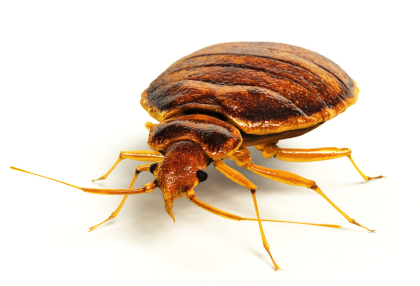
The most common species is the Cimex lectularius, which prefers the blood of humans, but it will also feed on other warm-blooded animals such as rodents, bats, dogs, cats and birds.
Where do They Thrive?
Hardy and prolific creatures, they thrive in the temperatures and humidity levels favored by humans. In a year, a female can produce three generations of offspring. Nymphs mature within a month. Each of those adult can survive up to a year without feeding, so even a vacant dwelling cannot be assumed to be bug-free.
Once they have found a host, they stay within a five to ten-foot radius of the feeding area. A hungry bug, however, can travel 100 feet in search of a blood meal. Insect repellants are ineffective. Studies have proven that they will march across wet or dry repellants and bite through them, with no ill effect on the bug.
Are They Dangerous?
These parasites do not transmit disease, though this seldom reassures anyone suffering from an invasion of the voracious little creatures. Entomologists have isolated several pathogens from their internal organs bugs, but as of this writing, no case of any illness has ever been traced to a bite.
The realization that one’s bed has been infested by bloodsucking insects can cause anxiety and serious psychological distress. Anxiety, fear and the itching bites can result in insomnia.
Reactions to Bites
Bites can be numerous in a heavy infestation, but they are rarely serious. Most people develop a raised, itchy, red bump or wheal at the site of a bite within ten minutes, though reaction can be delayed for seven to ten days.
A few individuals do not react at all to being bitten. Others may develop allergic reactions such as hives, blisters, or a rash. Children exposed to a heavy infestation are sometimes lethargic from disturbed sleep and can become anemic.
As with any insect bite, they can become infected from scratching. Itching can be controlled with calamine lotion or over-the-counter anti-itch creams. Always consult with a physician or pharmacist about the suitability of any topical treatment before use.
Not all bites in the night are the work of these insects. Mosquitoes, fleas, ants and spiders are also frequent offenders. If the source of bites cannot be easily discovered, it is best to call in a pest control professional for an inspection and treatment evaluation.
How Do Infestations Occur?
Wingless and unlikely to crawl more than ten feet from their established feeding site, these bugs rely on humans to transport them to new habitats. Unfortunately, it is all too easy to become a personal transport service for these bugs.
They are attracted to body warmth and the carbon dioxide given off during breathing. During the day, they conceal themselves in dark areas and crevices, such as inside box springs or in the screw holes and cracks in wooden bed frames. This habit means that they will also take refuge in clothing, shoes, luggage and other items that are left on or near their current habitat.
Unlike ticks and lice, do not attach themselves to a person’s skin or hair, but they can be transported inside the seams of clothing, purses, backpacks, luggage and shoes. Hitchhiking bugs can infest upholstered furniture, with couches and easy chairs being favorite destinations.
Early Detection is Crucial
If noticed early, an infestation can be controlled by treating the limited area the bugs inhabit. However, once they spread throughout a room or apartment, eradication becomes much more difficult. Unchecked or ineffectively treated, they can spread throughout a building.
Rats, mice, bats, birds or other wild mammals can also be the source of infestations. While the most common, Cimex lectularius, prefers a human host, other species of similar insects infest warm-blooded animals and will feed on humans and colonize homes if their animal hosts invade the building.
An infestation is not a sign of poor sanitation. Unlike vermin such as cockroaches and rodents, these bugs are not attracted to filth or food debris. The cleanest home may become the site of an infestation if the creatures are introduced from an infested area.
Detecting Them
As their name suggests, the first place to inspect is the bed. Check the sheets and blankets for any dead bugs, dormant bugs, or small, black spots and streaks. Take pillows out of their cases and check along their seams. Remove the bedding and check the mattress for the same signs of spots, streaks or bugs.
Take special care to check along seams, cording, tufting, and under any buttons. They are especially fond of the cording around the edge of a mattress, particularly where it folds over at the corners. If there is a pasted-on label on the top of the mattress, check carefully around it and under any loose areas.
Check the Box Springs
If possible, lift the mattress and check the box springs and bed frame, paying close attention to crevices, cracks and seams. Mattresses and box springs can be heavy and unwieldy, so have help to do this, if necessary, to avoid possible injury.
They may be more likely on the underside of mattresses and box springs than on top.
The bottom of box springs is their ideal habitat. Check along the dust cover. They congregate around the staples that hold the gauze dust cover to the frame.
If the box springs have plastic or cardboard corner protectors, they will often rest under or around them. If possible, remove these to allow inspection, but be aware that it may be difficult or impossible to reattach them as they were originally installed.
If the dust cover is loose, or torn, or if it can be removed by the owner, check inside the box springs for signs of insects. It is extremely difficult to thoroughly check every nook and cranny inside box springs, so if bugs are found on the outside it may be best to replace the box springs or cover it with a zippered case sold for dust mite and bug control.
Wooden bed frames are more likely to harbor insects than the more common metal variety, but the seams and overlapping sections of metal frames should also be inspected. Also be sure to look behind the headboard, if possible, and behind any pictures or loose wallpaper near the bed.
Drawers and Other Areas in the Room
These parasites cannot climb smooth surfaces, but hitchhiking bugs can invade drawers. Always check the inside and bottom of drawers and inside closets before storing clothing. If possible, do not remove clothing from the suitcase.
In dorms and furnished apartments, check along baseboards where they join the wall, and also along the edges and seams of carpets. Lift throw rugs to check the underside. Inspect upholstered furniture, paying special attention to seams, cording, cracks and crevices, and where attached cushions touch.
Check under seat cushions and along the seams and crevices of the furniture’s decking. Couches and recliners used for sleeping are to be considered especially suspect.
Heavy infestations can produce an unpleasant, sickly-sweet odor, but this is not a reliable indication of their presence. Even with close inspection, bugs can hide so well that they can be missed by someone who is not a pest-control specialist.
Prevention is the best method for dealing with the threat of infestations, while on the road or at home.
Avoid While Traveling
These bugs thrive in places like dorms and hotels, where the turn-over of guests are high.
Hard-shell luggage is less likely to harbor them than luggage made of fabric. Remember, they cannot crawl up smooth surfaces.
Pack a small, bright flashlight to aid in inspecting your hotel room. Bring sealable plastic bags for packing items that cannot be laundered. Place items that can be laundered into dissolvable laundry bags before returning home. Dissolvable laundry bags can be found at many retailers and purchased from online merchants.
How to Store Luggage
Never place luggage or clothing on the bed or other upholstered furniture. Always use a luggage stand or the top of a piece of furniture. If no luggage stand or suitable furniture is available, set luggage in the center of the room, away from other furniture. Do not allow luggage or clothing to touch walls near the beds or other upholstered furniture.
Because they prefer to be near their hosts, and because they cannot negotiate smooth surfaces, the safest place to store your luggage and other belongings is in the bathtub. If it is feasible, keep clean clothing inside the suitcase, and store soiled clothing in dissolvable laundry bags.
If bugs are found, or bites are discovered in the morning, contact management at once and request another room in a different area of the building.
Returning Home from Travel
Before returning home, seal luggage in trash bags. On arrival at home, unpack the luggage outside. Do not bring luggage back into the home until it is treated. This can be done by exposing it to heat. Temperatures above 120°F will kill adults and their eggs.
In the summer, a simple method of disinfection is to place luggage in sealed black plastic bags, and set the bags in direct sunlight. Check interior temperature with a thermometer before removal. In winter, a blow dryer or heat gun may be used, but is somewhat less effective. Discard the used trash and packing bags in outdoor receptacles.
For frequent travelers, special units are available that will heat luggage to the appropriate temperature to eradicate all bugs and their eggs. These may be found wherever luggage and travel supplies are sold, and through online retailers.
Unpacking Luggage
Launder all clothing without removing it from the dissolvable laundry bags. Launder clothing as soon as it is unpacked. If it is allowed to sit in the laundry room, any stowaway bugs will have a chance to wander away and begin to breed. Use water of at least 120°F. Adding borax, a mineral laundry aid available at most supermarkets, is considered helpful. Dry laundered clothing on the hottest dryer setting the fabrics can tolerate.
Commercial dry cleaning will kill these bugs, but taking infested articles in to be cleaned risks spreading the insects to the entire shop. Dry cleaning experts say that delicate items such as silks or men’s suits will not be harmed by application of dry heat below 160°F.
This can be applied by placing items in black plastic bags in the sun for a day. Do not overfill the bags, as that can allow the bugs to seek refuge in cooler areas. Use a thermometer to ensure that the entire contents of the bag reach the critical temperature of 120°F.
Other Heat Methods
If sun treatment isn’t feasible, de-bug items by sealing them into bags and placing the bags on top of heating pads until temperatures of 120°F or above are achieved for ten to twenty minutes. Use caution when utilizing heating devices for this purpose and never leave the items unattended while being treated.
Items that are not delicate, but which cannot be laundered, such as purses or backpacks, can be disinfected by being put in the dryer on moderate heat, between 120°F and 160°F, for ten to twenty minutes.
Do not overload the dryer; small or medium-sized loads ensure effective heat circulation. Place infested articles in the affected home’s laundry machines only. Transporting buggy linens and items to a commercial laundry or Laundromat will spread the insects to many other locations.
Prevention At Home
Because they can survive for long periods without feeding, it is important to check for signs of their presence when moving into a previously occupied home.
Used and Secondhand Items
Do not bring discarded or secondhand bedding or upholstered furniture into the house. Use extreme caution when bringing in used furniture, such as dressers, bureaus and chests. Remember, that interesting piece may have been set out on the curb because it is full of bugs!
Vintage clothing stores, thrift stores, flea markets and consignment shops are all enjoyable places to find unique bargains, but remember to treat your purchases and also to change and launder your shopping attire as soon as you return home.
These bugs cannot jump or fly, but brushing against items or trying on pieces that harbor them can allow some to stow away. It only takes one egg-bearing female to launch a hostile take-over of the home.
Place all secondhand clothing purchases into dissolvable plastic bags and launder as soon as the items are brought home. Items such as purses, backpacks, luggage, shoes or dry-clean-only clothing should be treated with dry heat as described above in the tips for travelers. Remember, temperatures above 120°F will kill these bugs and their eggs.
How to Handle Bed Frames
Metal bed frames are far less hospitable bugs than wooden ones. Great-grandma favored brass and iron beds for just this reason. If a clean wooden bed frame must be placed in a building suspected of harboring bugs, the bed can be protected to prevent invasion.
Set bed frame legs into metal cans, or onto glue board traps used for cockroaches and mice. Bed frame legs can also be coated with mineral oil or talc used as body-dusting powder. Both substances make the surface impossible for bugs to climb. Bed legs can also be wrapped in double-sided tape.
Keep headboards at least one inch from the wall. Wall-mounted headboards should be removable for periodic inspection and cleaning. Do not allow bedding to touch the floor, and chose bedding that may be cleaned by machine washing and drying.
Enclose mattresses, box springs and pillows in zippered cases advertised to be impervious. Cases advertised as preventing dust mites are also acceptable. These are available from many retailers that carry bedding and house wares, as well as from online retailers.
These cases will prevent an invasion, and will isolate and eventually starve any bugs that may be trapped inside. Check cases frequently, as the material is vulnerable to tearing, especially where there is contact between the case and the bed frame.
Home Care
In the rest of the home, choose furniture that has raised legs, rather than pieces that sit directly onto the floor. Favor metal and molded plastic furniture pieces over wooden ones and simple leather or vinyl upholstery over fabrics with welting and tufting.
Paint is less bug friendly than wallpaper. Loose wallpaper should be re-glued. Paneling should be avoided, but if it is not possible to remove it, seal all cracks with caulking. Bare floors are preferable to carpet or throw rugs, and sheet vinyl and other seamless flooring materials are preferable to planks.
Repair and seal any cracks in plaster or sheet rock, and caulk any cracks between walls and trim. Loose tiles should be reset and grouted.
These insects are indifferent to dust, dirt and scattered crumbs, but they relish clutter. Piles of clothing and other items in corners and on the floor provide prime hiding places. Items should not be stored under beds or sofas.
Closet floor should be kept clear, and if possible, items on hangers should not touch the closet walls or floors. Wire shelving is preferable to wood, and wooden clothes hangers should be avoided.
Eradicating These Pests
Once they have become established, totally eradicating them even by professional methods becomes an almost impossible task. Once they multiplied throughout a home, hotel, or multi-unit dwelling, it is more precise to speak of control.
If they are found soon after they enter, while they invest only a bed or other single furniture item, then eradication is feasible via an intensive search-and-destroy plan.
How to Handle Infested Furniture
A couch or chair that harbors bugs is best discarded. Because of the construction of these types of furniture, it is impossible to reach all the areas where they may hide. Wrap the item in plastic sheeting, and tape it securely closed. This will prevent dropping bugs or allowing them to sneak into clothing while the furniture is being carried away for disposal.
When setting an infested piece out on the curb for garbage removal, it is advisable to attach a sign to it stating that it harbors these offending creatures. It may also be wise to damage the piece so that no one is tempted to try and salvage it.
What to Do With Bedding
If the bugs have invaded a bed, and the mattress and box springs are older or damaged, it is best to discard both mattress and box springs. Place them inside sealed plastic bags to avoid shaking bugs loose during removal from the bedroom.
It is not recommended to spray any pesticide on the upper surface of a mattress. Some professional exterminators will treat the sides and seams of mattresses and box springs, but this requires special equipment, training, and chemicals that are not available for use by home owners.
Disassemble the bed frame and clean each piece thoroughly to remove any bugs or eggs. Rubbing alcohol will destroy both adults and eggs on contact, though it has no residual effect once it dries. Test it first in a hidden area because it may damage the furniture finish.
Before reassembly, dust the frame with talc, diatomaceous earth or boric acid. Diatomaceous earth is made from microscopic fossils that scratch the coating on an insect’s body, causing the bug to dehydrate. Boric acid sticks to an insect’s body and when groomed away, the powder solidifies and destroys the insect’s digestive system.
Both diatomaceous earth and boric acid are considered safe for humans and pets, but be sure to read and follow all label directions and stated cautions before using either pesticide.
Wash all bedding in the hottest water the fabric can tolerate with laundry detergent and borax. Dry at a temperature that will ensure all parts of the bedding reach at least 120°F for at least ten to twenty minutes.
Checking for Bugs
Patrol the room with a flashlight and a putty knife or old credit card. Use the putty knife or card to scrape bugs out of crevices or cracks. A blow dryer set on high heat and low fan will also work to force the bugs out of hiding.
Capture any live bugs that emerge in a paper towel wet with rubbing alcohol, or simply crush them in the towel. Dispose of the towels in an outside garbage receptacle.
Be sure to check posters, pictures, mirrors and wall hangings. Use the putty knife or card to check between frame and backing. Scrape any cracks in the walls or flooring, and reattach peeling wallpaper.
Remove and check the inside surface of the plates over electrical outlets and light switches. DO NOT touch any wires or insert anything into the wiring box. If they are found inside the wiring boxes, a pest control professional must be consulted.
If there are any phones, clocks, toys, smoke detectors or other small appliances within ten feet of the item harboring these bugs, use the flashlight to inspect inside them through ventilation vents or other openings. Do not open electrical devices, because of the risk of a dangerous shock.
Extra Precautions
Remove all clutter from the room. This removes potential harborage spots and also makes checking for the insects much easier. Seal any item that is possibly infected in a plastic bag and launder or heat-treat.
Before bringing in a new mattress and box springs, cover the new bedding pieces in cases labeled for bug or dust mite control. It is recommended to also enclose pillows in these cases, and to avoid decorative toss pillows or stuffed toys on the bed until the infestation is completely eradicated.
Preventing Future Infestations
Missed eggs hatch within ten days at normal room temperature. For this reason, it is recommended that a check be made every few days for newly hatched bugs. Nymphs are very small, not much bigger than sesame seeds.
It may be helpful to hunt at night, using a magnifying glass and a flashlight with a red lens or with red plastic film or red tissue over the lens. The red light cannot be detected by the bugs, so they will not flee to their hiding places as they would normally do when disturbed.
Thorough vacuuming is helpful in preventing re-establishment of bugs, though it is not as useful for eliminating the primary infestation. Use a crevice tool and vacuum using scrubbing motions along seams and crevices where bugs were found. Be sure to remove the vacuum bag at once, and dispose of it in an outdoor container. It is best not to use vacuums with reusable bags for this purpose.
Remake the bed with white sheets, if possible. This will make it easier to spot even small insects, and to see their dark waste spots much more easily.
Natural Control Methods
Unfortunately, there are no natural control methods that are proven to be effective. Cedar wood, lavender, herbs, essential oils and other aromatics that are effective for repelling moths or other household pests have no effect on these parasites.
Before the twentieth century, bean plant leaves were scattered around the legs of wooden bed frames. The microscopic hooks on these fuzzy leaves would entangle the spurs on their legs, entrapping them. When the leaves wilted or were spotted with bugs, they would be swept up and replaced.
Not many homeowners have access to large quantities of bean plant leaves, and the bean season is short, so this is a control method of more historical than practical interest.
Biological Controls
Biological controls are also not feasible. Cockroaches, Pharaoh and Argentine ants, and spiders all prey on these bugs. It is obvious, however, that these pests present far more risk to humans. Cockroaches ruin food, carry several serious diseases and can aggravate asthma and other respiratory illnesses.
Ants also carry disease organisms and foul food stuffs. Unlike the bite of a bed bug, the sting of an ant or the bite of a spider is venomous and can cause serious reactions.
Heating and Freezing
As mentioned earlier in this article, heat is an effective means of killing adults and their eggs, but as a do-it-yourself project, it is an effective spot treatment only.
Attempts by desperate homeowners to rid themselves of the infestation by cranking up the thermostat are rarely successful. Bugs can find cooler spots to seek refuge, and home heating systems rarely can raise the temperature throughout the home high enough to ensure that all bugs and eggs are killed.
Freezing will also eradicate these bugs, but the items must be kept in a home freezer for at least a week, so this is rarely a practical process for nonprofessionals.
When to Call a Professional
If bugs have spread past a bed or single piece of furniture, it is best to seek the help of a pest-control professional. Effective control of this insect is extremely difficult, and an exterminator will have the training, chemicals and tools to ensure that the bugs are destroyed with no risk to pets or the human occupants of the dwelling.
Any infestation in a hotel or multi-unit dwelling requires professional attention immediately. All affected rooms or apartments must be treated at the same time, to prevent bugs from being reintroduced into a treated unit to another that is still infested.
If a person shows a tendency towards allergic reaction to bites, it is wise to bring in professional assistance for an inspection and evaluation even if the infestation is only suspected. The professional technician will be able to determine if the bites are due to bloodsucking bugs or other pests, and estimate the level of infestation.
Choosing a Pest-Control Professional
If you live in a multi-unit dwelling such as an apartment, townhouse or condominium, the choice of pest control service may be made by your property manager or landlord.
If the homeowner must make the decision, there are several guidelines to aid in making that choice. Referrals from friends and family members who have used a certain company and are pleased with the service is always a good starting point. However, companies that do excellent work in treating other types of pest problems may not be familiar with the treatment procedures and chemicals used for eradicating bugs.
When calling a pest control company, ask about their training and treatment plan for controlling infestations. Be cautious about any company that claims they can rid the home with one treatment. These bugs are a resistant, difficult insect to control even with professional treatment, and the pest control company must return for inspection and retreatment once or twice to ensure the pests are destroyed.
Professional treatments will at require at least one and possibly two or three follow up visits, to allow the technician to monitor remaining bug populations and to re-treat any areas that may still show signs of infestation.
Get Estimates
A reputable company will give full details about the service plan and its costs. Cheaper is not always better when choosing a pest control company. Always interview more than one company and receive estimates. A reputable company will come out, inspect the property and give a quote for service rather than stating a flat fee.
After the inspection, the homeowner should receive a written report detailing the findings of the inspection, as well as outlining a recommended plan of action for addressing the problems discovered.
If there are extenuating circumstances in the home, such as an allergic individual or someone who is incapacitated and cannot be vacated during treatment if necessary, be certain to make the pest control company aware of it during the inspection visit.
Integrated Pest Management
Most companies that are knowledgeable about treating these bugs will use Integrated Pest Management practices. IPM practices include judicious use of pesticides along with nonchemical control practices such as using heat, cold, or steam to destroy insects, and physical controls such as vacuuming and removing points of entry.
A pest control company utilizing IPM practices may ask the homeowner to aid in the treatment by making sure that clutter is removed, or personal items bagged and sealed before treatment. These requests should be clearly stated in writing and any questions answered to the satisfaction of the homeowner before a treatment contract is signed.
Review the Contract
Always carefully read any contract or service agreement offered. Before signing, be sure that the contract is fully understood.
Some points to consider include the company’s cancellation policy. Is the homeowner as well as the pest control company allowed to cancel the contract? Are there penalties for cancellation? What, if any, exclusion clauses are included? An exclusion clause specifies what circumstances may cause the contract to be canceled.
What Sort of Arbitration or Other Method is Used to Settle Disputes?
Make certain that the company carries insurance to cover incidents like accidental staining or breaking of furnishings. These are normally covered in the contract under an “errors and omissions” clause.
The company must be licensed. Licensing requirements vary from state to state, but in most licensing means that all technicians have had proper training, and that a Certified Operator in charge of all technicians is on call within a certain geographical area.
Both the homeowner and the pest control company must sign any contract or agreement. Do not sign until the contract is completely read and understood. The pest control technician or the office staff should be able to answer any questions to the homeowner’s satisfaction.
Chemicals Used for Control
DDT
The banned pesticide DDT was responsible for reducing these bugs from a ubiquitous threat at the time of its first use in the 1940s, to near extinction in the U.S., U.K. and Canada by the late 1950s.
DDT acted by disrupting an insect’s nervous system, causing all the neurons to fire simultaneously. This especially effective method of action was augmented by the fact that DDT was, and is, highly persistent. Once applied, it had a residual effect that remained effective for months, sometimes years.
Unfortunately, this same tendency to persist in the environment wreaked environmental havoc among species that were never intended to be poisoned with DDT. It was considered safe for humans at the time it was extensively in use, an assurance that is no longer considered true.
They had only begun to develop resistance DDT before it was banned in the U.S. DDT is still used in other countries, and recent reports indicate that bugs in those areas have begun to develop resistance to the powerful pesticide. In fact, one study in Africa indicated that they actually became more active after being sprayed with the chemical.
Chemicals for Non-Professional Use
Other than diatomaceous earth, boric acid, and non-residual pyrethrin, there are no pesticides effective that can be applied by a non-professional. Pyrethrin is derived from a type of chrysanthemum and functions as a neuro-toxic contact poison for insects.
While it is very safe, pyrethrin is, by definition and function, a poison. Carefully follow all instructions, warnings and cautions on the label. Anecdotal evidence suggests that in some regions bugs have become immune to the pyrethrine compounds available for use by home owners.
The commonly available “bug bombs”and foggers are ineffective because the released mist of pesticide does not reach into the small, enclosed spaces where the bugs hide.
Chemicals Used by Professionals
Chemicals available to trained, professional applicators that are effective against these parasites include benseneacatate, chlorpyrifos, cyfluthrin, fencalerate, hydoprene, permethrin, propoxur, and resmethrin.
Hydroprene has a unique form of action; it does not poison the bugs, but sterilizes the males. Over time, this drives the population to extinction if unaffected bugs are not brought into the area.
Professional Methods of Control
Many of the professional methods are similar to the methods described above for use by the homeowner. However, the professional receives additional training and has access to methods that are not available to the general public.
Heat and Cold
Special heating units may be utilized, which can bring an entire room or unit up to the proper temperature that is lethal to adults and their eggs. The temperature must be maintained for a sustained period.
Cold treatment may be used for items sensitive to heat. Steam treatment may be used for items such as mattress top surfaces, drapes or other items that cannot be easily laundered or treated with pesticides.
Vacuuming
Vacuuming is also part of a professional control treatment, using special machines outfitted with HEPA filters which contain the bugs to prevent re-infestation of the treated area or others.
Pesticides
Judicious use of approved pesticides is part of a professional treatment plan, and these chemicals can be applied with precision and training unavailable to unlicensed applicators.
Other, more unusual methods include tented fumigation, in which a room or an entire building is sealed and fumigated. This is used only in cases of severe infestation.
Dog-Sniffing Services
Canine detection teams are a new method of detection and inspection used by some pest control companies. A specially trained dog, usually a beagle, is brought in by a handler. The dog will alert the handler to the scent of bugs. These canine professionals are very useful in verifying the presence of bugs in cases of light infestations, and are also useful in determining if treatment methods have been successful in eradication.

Monitors
Monitoring devices that attract bugs through heat and the release of carbon dioxide may also be employed. These are not traps that are intended to eradicate the bugs. They are used to estimate population size, to help determine treatment plans or to determine if treatment has been successful.
The Costs of Prevention and Treatment
These bugs can be expensive pests to control and treat. Regardless of the costs to homeowners, renters and property managers, they also extract a considerable toll on society. Those afflicted with an invasion may lose work or productivity due to sleep deprivation and anxiety. There may be healthcare costs from these issues, or from allergic reactions or infections due to bites.
Professional treatments may be more expensive than treatment for other household pests, because treatments require several treatments by a licensed pest control technician.
Costs of control also include such things as replacing infested furnishings, making necessary repairs to prevent re-infestation, and the purchase of bug-proof encasements for bedding.
Commercial and Multi-Unit Buildings
Bug control in commercial facilities or multi-unit dwellings may be considerably more expensive than treatment for other forms of pests. This is because of the more extensive cooperation required by the staff or renters in preventing the spread from one area to the other, as well as the expenses incurred in treating multiple areas instead of one room or single-family home.
Professional treatment costs vary widely, depending on the geographical area as well as the unique requirements of the infestation area. Professional treatment fees can range from hundreds to thousands of dollars.
Individual Expenses
The costs of controls available to individuals are less daunting. These figures are estimates or averages, and should be used for general information purposes only.
Dissolvable laundry bags cost about $2 per bag. These are an important part of any treatment plan, as well as essential for travelers.
Bug-proof encasements for mattresses and box springs may cost about $80 dollars for a mattress case, and $50 for box springs. These prices vary according to bedding size and from retailer to retailer.
Units that use heat to kill the bugs in luggage cost about $300. Heat treatment for an entire apartment may run from $800 to $2,000.
The use of a canine unit may cost about $1,900 per day, or some fraction of that for shorter visits.
Conclusion
For financial reasons as well as health and peace of mind, when dealing with the growing threat of bed bug infestation, an “ounce” of prevention is more useful and much less expensive than the “pound” of cure required.
Take proper precautions and be ever vigilant about detecting and eradicating these bugs at the first sign of invasion. If everyone follows these practices, then these bloodsucking insects may well once again become only part of history and a figure of speech.





5 Comments
We just had a major company come in and charged over $700. We were told that we would only see a few dead bugs after the one treatment. We did not sleep in our bed for three days and on the third night my husband slept on the bed. I went in at 4AM and there were bugs that had bitten him on the bed and a few climbing the walls. They did not look like dying bugs. Two rooms were treated and I called the professional company today and demanded that they come out but they cannot do another treatment until tomorrow. I am afraid that these bugs are crossing the bedroom barrier and looking for us as we have moved sleeping to the family room and living room. I found a few dead bugs in the Family Room which means they have left the bedroom to look for us. Is this normal activity after one treatment? They were hiding in the bed frame holes and I am seeing them in crown molding.
I appreciate, result in I discovered exactly what I used to be having a
look for. You’ve ended my 4 day lengthy hunt! God Bless you man. Have
a great day. Bye
Garlic helps keeping them away. Put some grated garlic near your bed. I don’t know how it works exactly, maybe it covers the co2 or …
But it works
I have dealt with bedbugs, I’ve lived in a government subsidized apartment building for over three years now. If I’ve lived elsewhere I would have had to pay for professional treatment myself which could have cost me around 1000$ or more. Unfortunetaly there may still be bedbugs in my dwelling they’re EXTREMELY hard to control or to find, these little fucks hide in all ALL bed related areas. I had to follow a strict procedure(no friends over, bag all clothes, linen, sheets and wash after wash etc.etc.) for a whole god-damned year! My apartment is going to get a preventive treatment today (No sleep for me tonight). If the professionals DO find them AGAIN then it goes without sayin that on your own it is IPSO FACTO IMPOSSIBLE to get rid of them, you have to pay for professional treatment. For a guy on social assistance like me it’s a fucking CURSE! Have a good one.
What a horrible problem to have! We found these creatures in all 3 bedrooms & we were horrified! First of all the woman of the house is terrified of bugs in general so the thought of sleeping with them was unimaginable. We contacted professional help & they have a 90 day guarantee…thank god for that because even after heat treatment & chemicals they had to return 3 times as we found “lingering ” live bugs! It is a fight & even now after 8 months we still search hard to be sure that they are gone…needless to say we wish ddt was still available. These things just don’t quit, you must be extremely vigilant!